Curtain Bangs: 20 Flattering Ways to Wear Them at Any Length
In this guide
- Curtain Bangs by Length and Cut
- Curtain Bangs by Texture and Hair Style
- Curtain Bangs Styled Up, and Matched to Your Face
- Curtain Bangs for Black Women and Natural Hair
- Who Curtain Bangs Suit, and Who Should Skip Them
- What to Ask Your Stylist: The Exact Words
- How to Style Curtain Bangs Every Morning
- Trimming and Growing Out Curtain Bangs
- FAQs
Curtain bangs are a soft, center parted fringe that sweeps open to both sides of the face like curtains, shorter in the middle and longer at the edges. They suit almost every face shape and hair length, they grow out gracefully, and they are the lowest commitment way to try bangs without the regret of a blunt fringe.
There is a reason curtain bangs keep coming back decade after decade. They frame the eyes and cheekbones, they soften a strong forehead, and they blend into the rest of your hair so smoothly that skipping a trim never looks like a mistake.
In this guide we show you 20 distinct ways to wear curtain bangs, from long layers to natural curls, each one explained on its own. You will also find who should skip them, the exact words to say to your stylist, a two minute morning routine, and a simple plan for trimming or growing them out.
Curtain Bangs by Length and Cut
The base haircut underneath decides how your curtain bangs behave, so start here if you are pairing them with a new cut. These seven versions cover every length from a bob to waist length hair.
1. Curtain Bangs With Long Layers
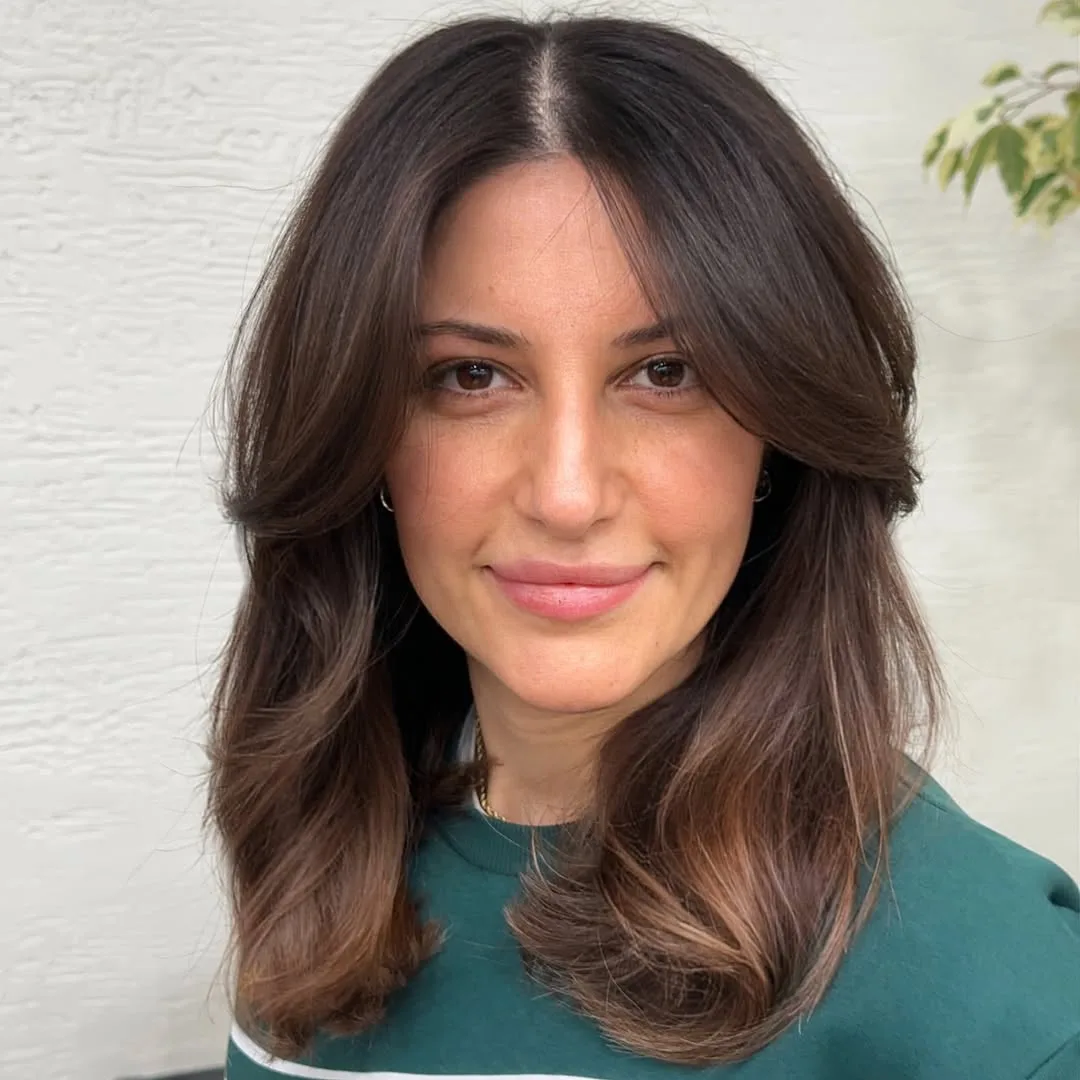
This is the classic pairing: curtain bangs that melt into long face framing layers, so there is no visible line where the fringe ends and the hair begins. It suits oval and heart shaped faces beautifully and adds movement to hair that otherwise hangs in one heavy sheet. Upkeep is gentle, because the bangs and layers grow out together and only need reshaping every 8 to 10 weeks. Style with a round brush, pulling the bangs forward first and then sweeping them open as they cool.
2. Curtain Bangs With a Bob
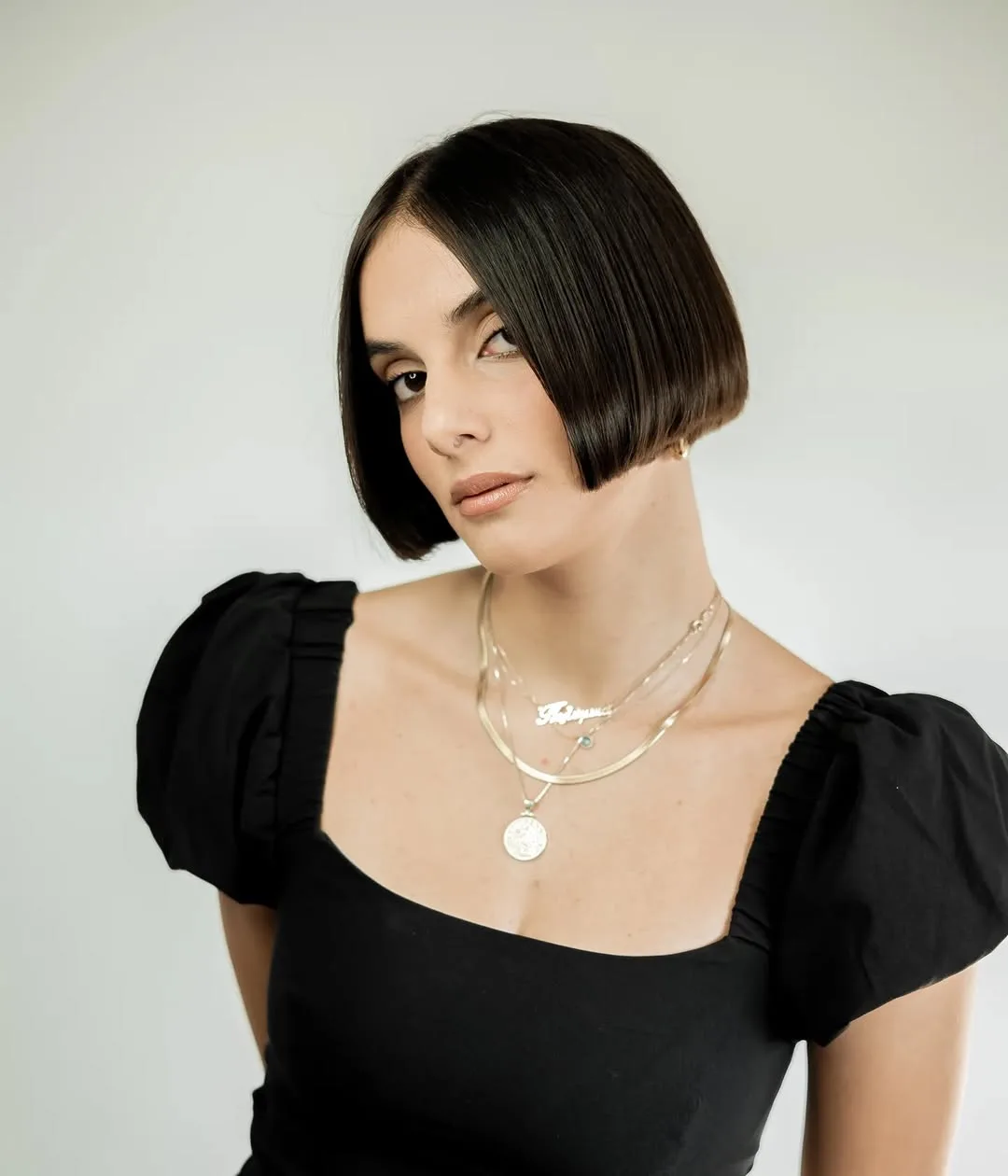
A bob with curtain bangs gets instant softness and a French, undone feel that a plain bob can lack. The bangs should hit around the cheekbone so they open up the face instead of closing it in. This pairing is lovely on square faces, because the sweeping fringe breaks up a strong jawline. If you are choosing between bob lengths, our bob hairstyles guide shows which ones leave enough front length for a proper curtain shape.
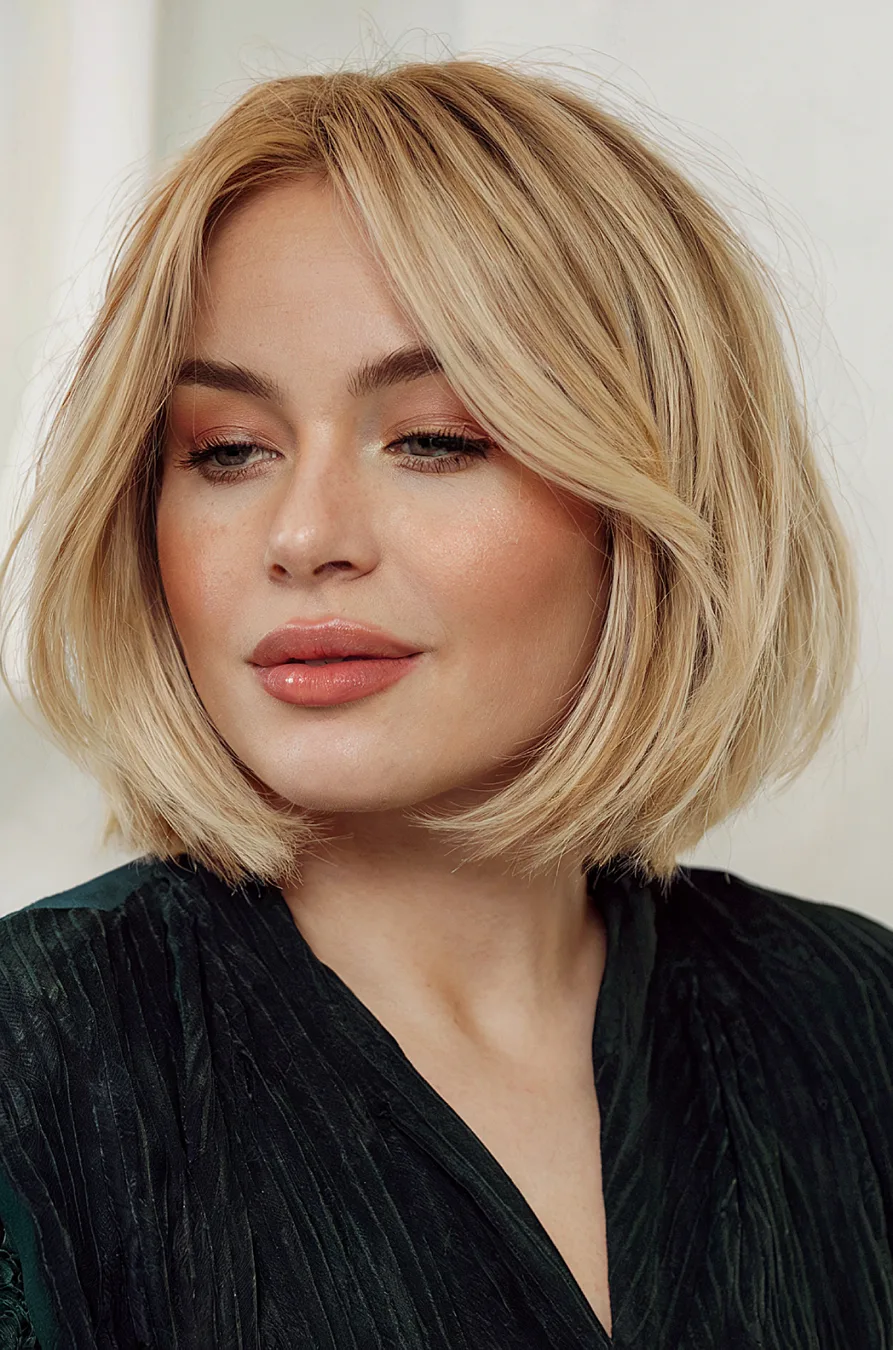
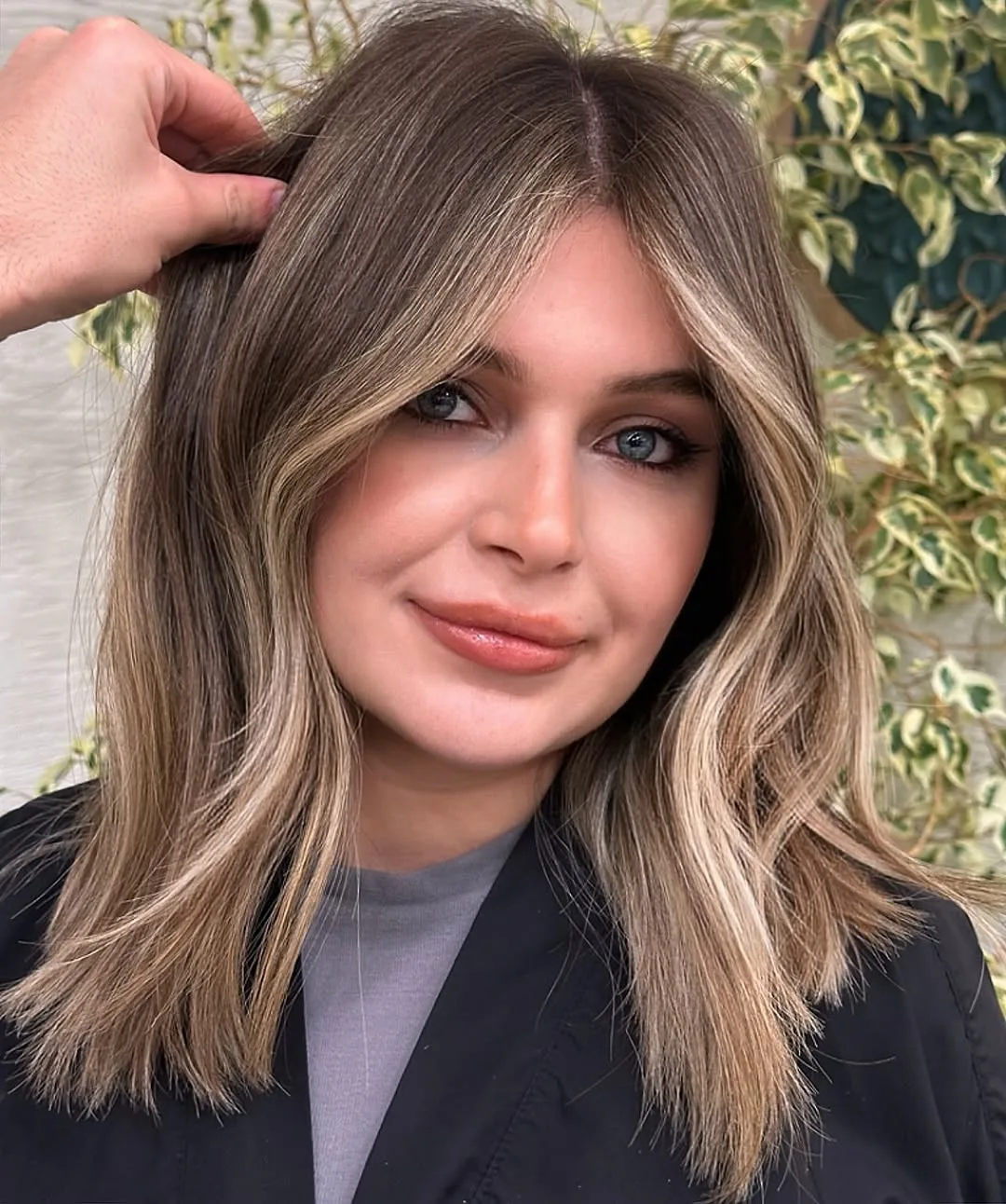
3. Curtain Bangs With a Lob
The lob and curtain bangs are the most requested salon combination of the last few years, and for good reason: the collarbone length keeps things modern while the bangs add shape around the face. It works on straight, wavy, and thick hair, and it is forgiving if you are growing out a shorter cut. Ask for the shortest point of the bang to sit just below your nose so it can also be worn tucked back. Trims every 6 to 8 weeks keep the balance between the fringe and the length.
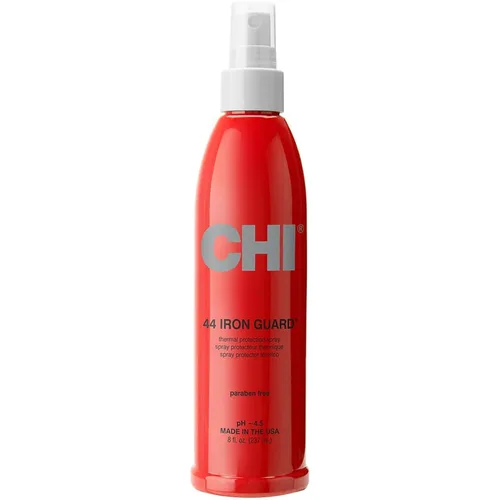
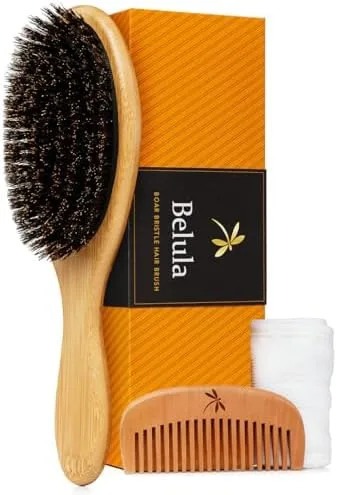
Affiliate links: I may earn a small commission at no extra cost to you. Prices as of Nov 27, 2026, and may change.
4. Short Curtain Bangs
Short curtain bangs start around brow level in the center and give a brighter, more open look than the longer versions. They suit women with smaller foreheads, where long bangs would overwhelm the face. The trade off is commitment: short bangs show regrowth faster and need a tidy every 3 to 4 weeks. They also misbehave more in humidity, so keep a mini flat iron or a roller handy for quick morning corrections.
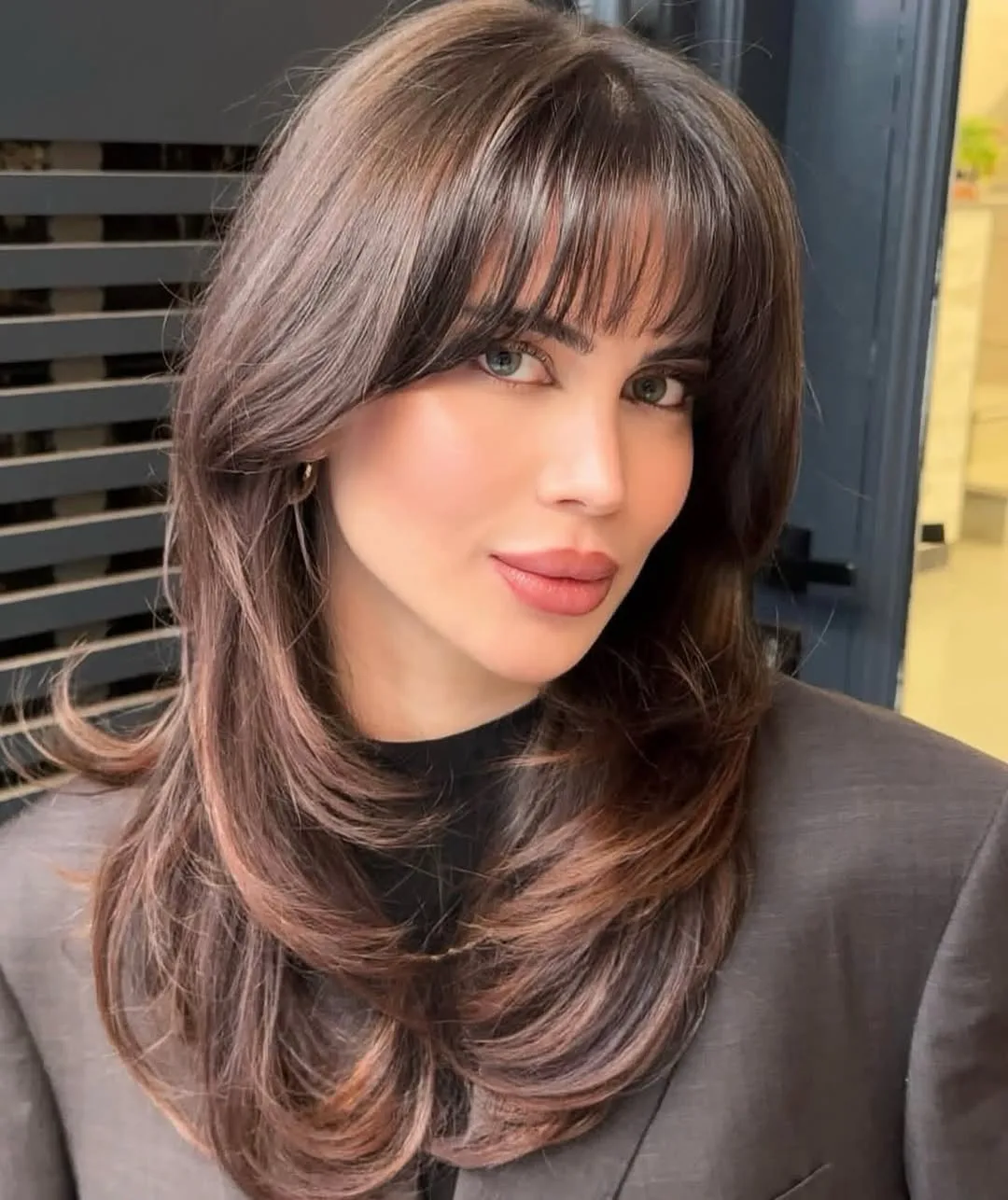
5. Long Curtain Bangs
Long curtain bangs reach the jaw or below and are really face framing layers with a center part. They are the safest first step if you have never had bangs, because they can be tucked behind your ears or clipped back completely on day one. Women with round faces love them, since the long vertical lines slim the cheeks. Because there is barely a fringe to maintain, you can stretch salon visits to every 10 to 12 weeks.
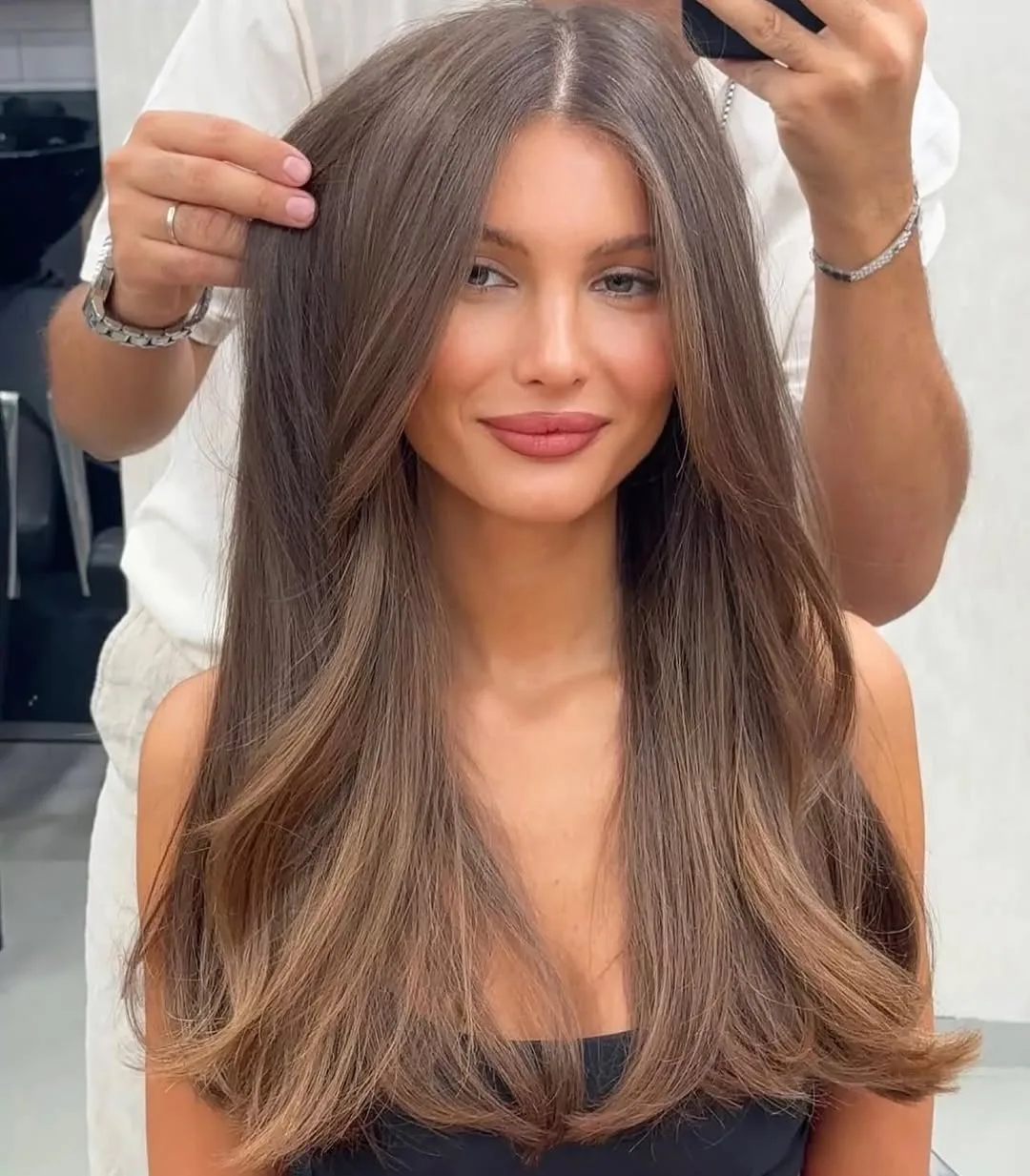
6. Wispy Curtain Bangs
Wispy curtain bangs are cut fine and feathered, so you see forehead through them and the whole effect is soft and light. They are the kindest option for fine or thinning hair, where a thick fringe would expose how little hair there is. Wispy bangs also suit older women beautifully, because the softness flatters the face without harsh lines. They do need daily styling help, since fine wisps separate and go stringy without a quick blow dry and a touch of dry shampoo.
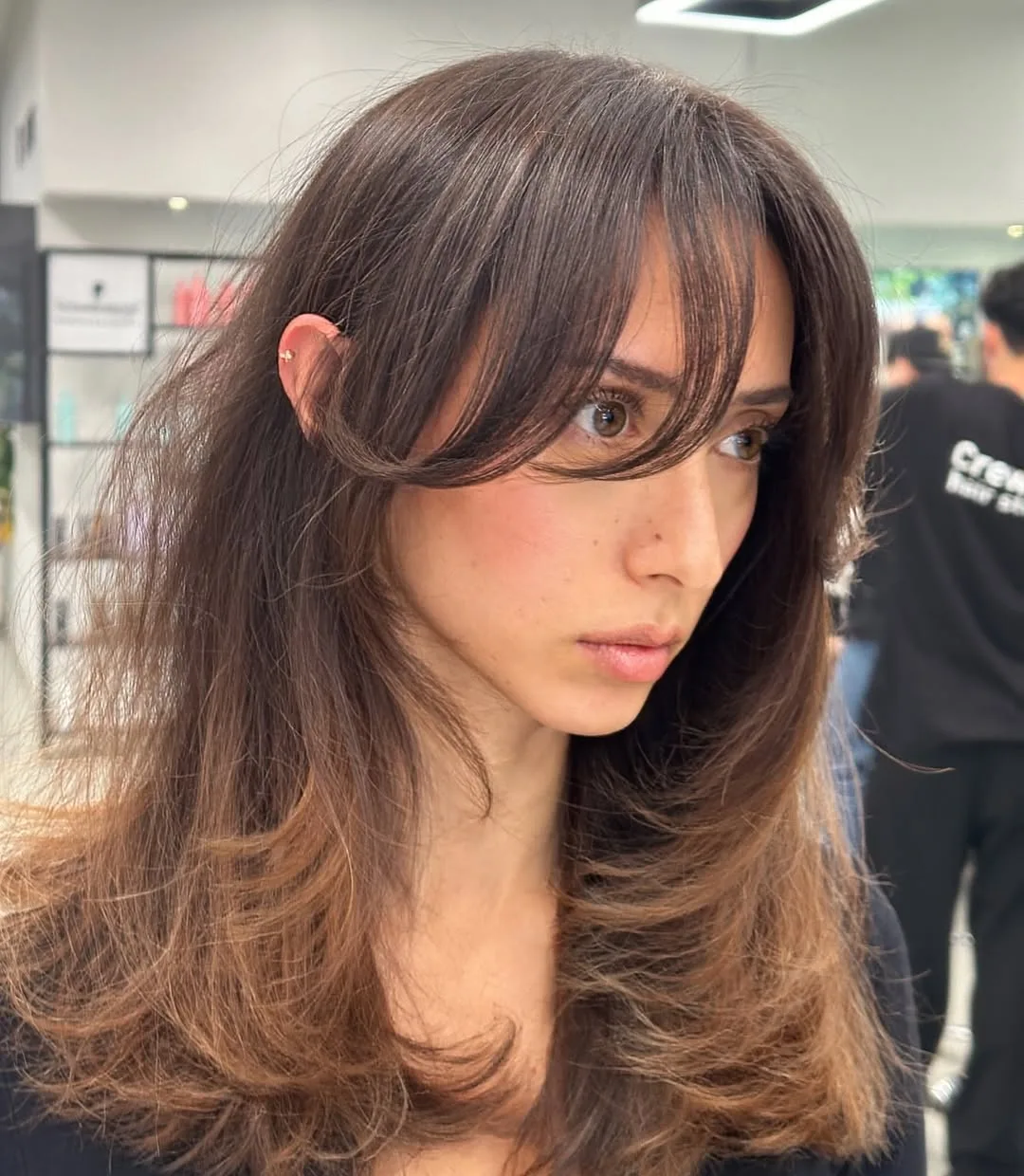
7. Thick Curtain Bangs
Thick curtain bangs are cut from a deeper section of hair, giving a full, statement fringe that still parts in the middle and sweeps open. They are made for thick hair, where a wispy version would look lost, and they balance a high forehead perfectly. The weight means they fall into place more obediently than fine bangs, which many women find easier day to day. Expect a proper reshape every 5 to 6 weeks, because thick bangs lose their sweep as they gain length.
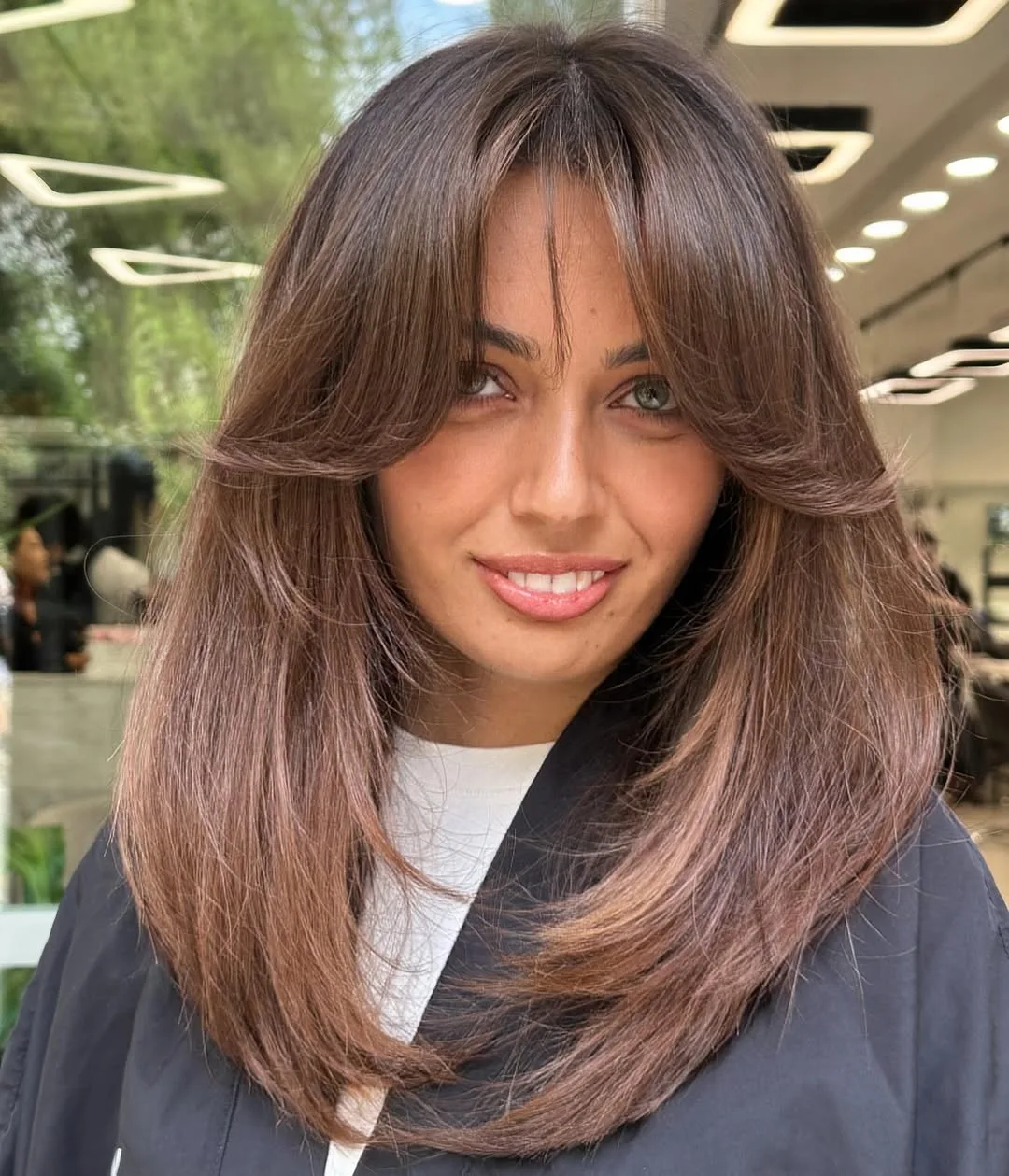
Curtain Bangs by Texture and Hair Style
Your texture changes how curtain bangs fall, shrink, and behave between washes. These seven versions are matched to shags, curls, waves, straight hair, fine hair, and the retro looks that started it all.
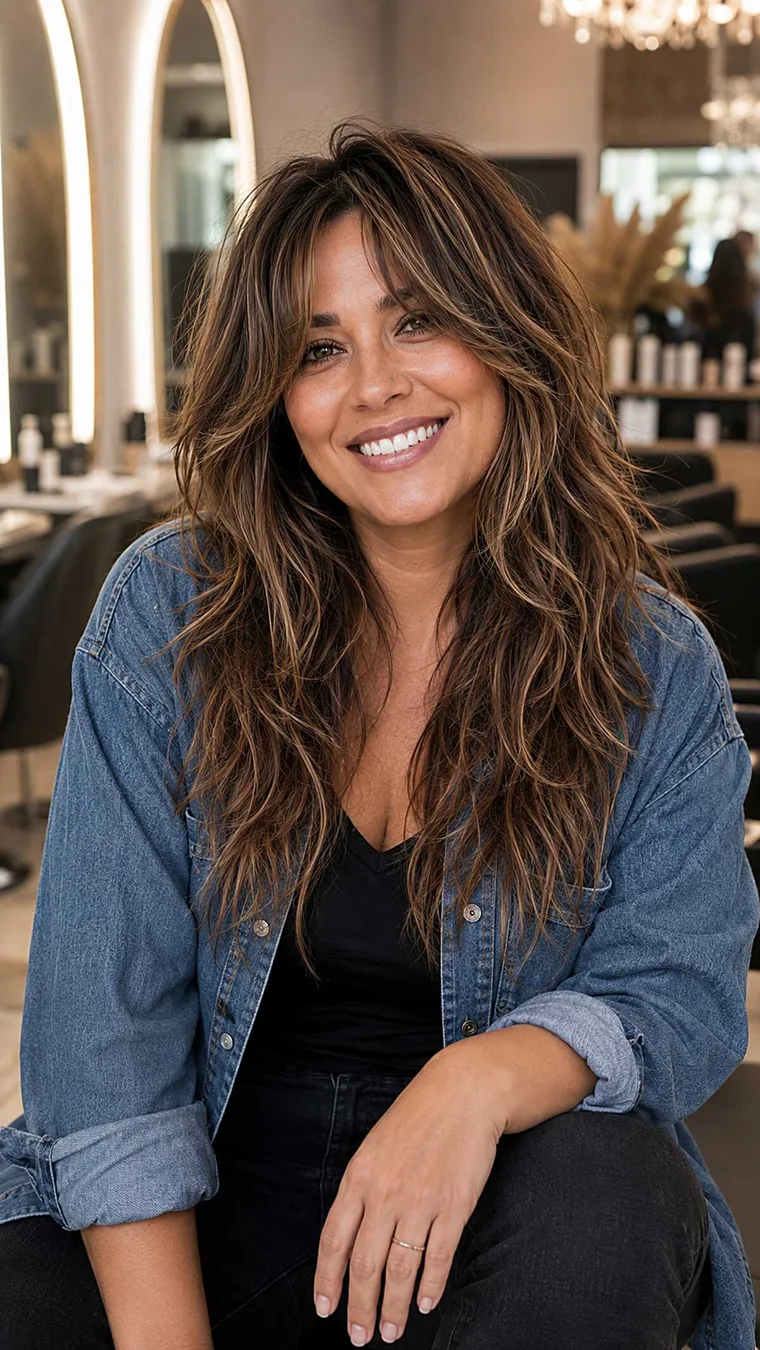
8. Curtain Bangs With a Shag
The shag and curtain bangs were born together in the 1970s, and the pairing still delivers the coolest, most effortless finish. Choppy layers through the lengths echo the choppy fringe, so the whole cut moves as one piece. It suits wavy and slightly unruly hair best, because the shag is designed to look a little undone. Styling is minimal: scrunch in some mousse, air dry, and let the texture do the work.
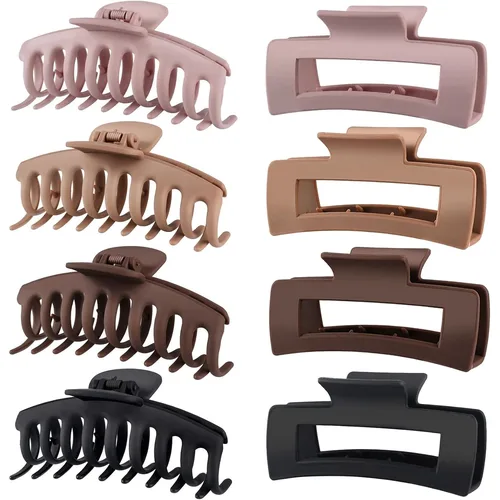
Affiliate links: I may earn a small commission at no extra cost to you. Prices as of Nov 27, 2026, and may change.
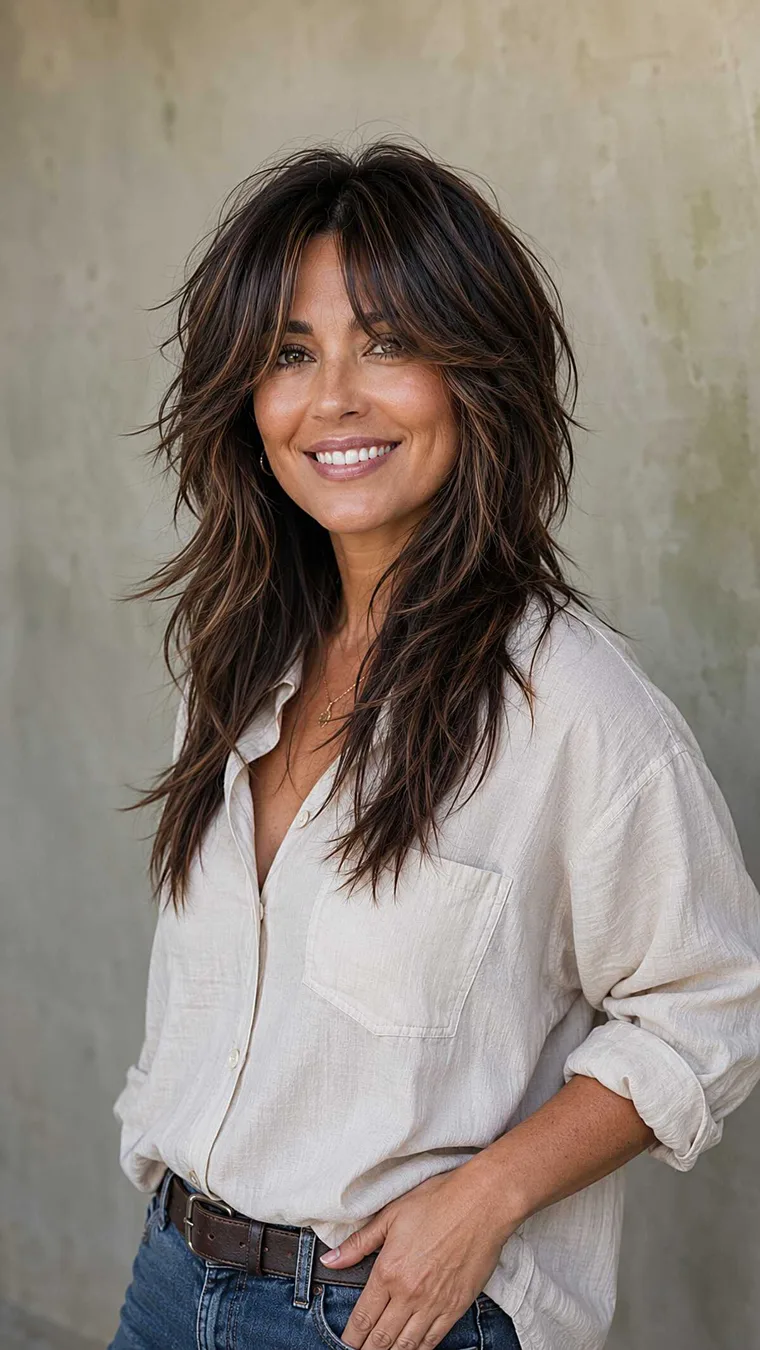
9. Curtain Bangs With a Wolf Cut
The wolf cut takes the shag further, with heavy layers on top, thinner ends, and curtain bangs that blend into the volume at the crown. It is a bold, high texture look that suits younger women and anyone who loves a slightly wild finish. Thick and wavy hair wears it best; very fine hair can look sparse at the ends. Be honest about upkeep, because the shape needs re-layering every 6 weeks to stop it collapsing into a mullet.
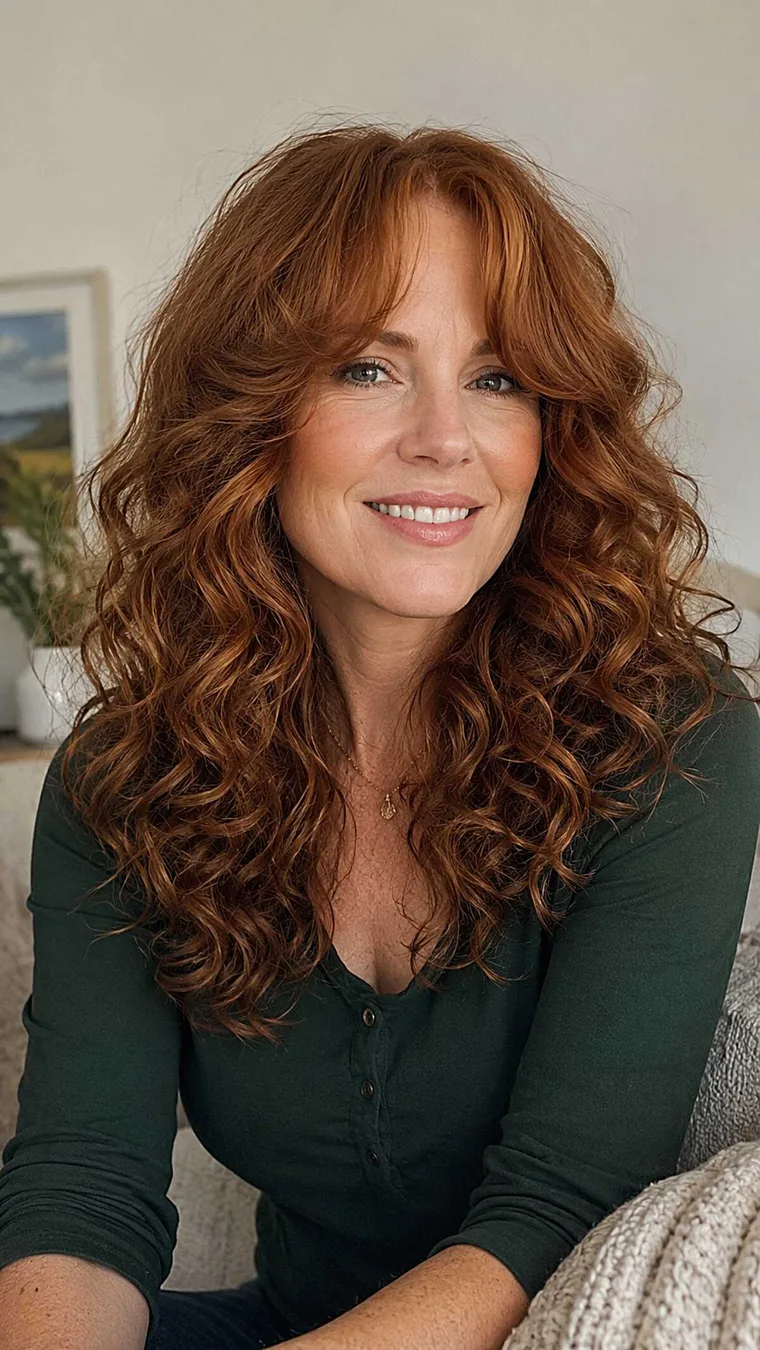
10. Curtain Bangs With Curly Hair
Curly curtain bangs are cut longer than you expect, because each curl springs up and shortens the fringe as it dries. Cut dry and curl by curl, they frame the face with soft tendrils instead of a solid shelf of hair. They suit type 2 and type 3 curls and look especially pretty with a few shorter pieces at the cheekbones. Refresh them in the morning with a water spritz and a pea sized amount of curl cream rather than rewetting your whole head.
11. Curtain Bangs With Wavy Hair
Wavy hair and curtain bangs are a natural match, because the gentle bend helps the fringe sweep open without much heat styling. Most women with loose waves can simply part the bangs while wet, add a little mousse, and let them air dry into place. The look is relaxed and romantic, and small imperfections in the part only add to the charm. If one side flips the wrong way, a five second pass with a round brush and dryer fixes it.
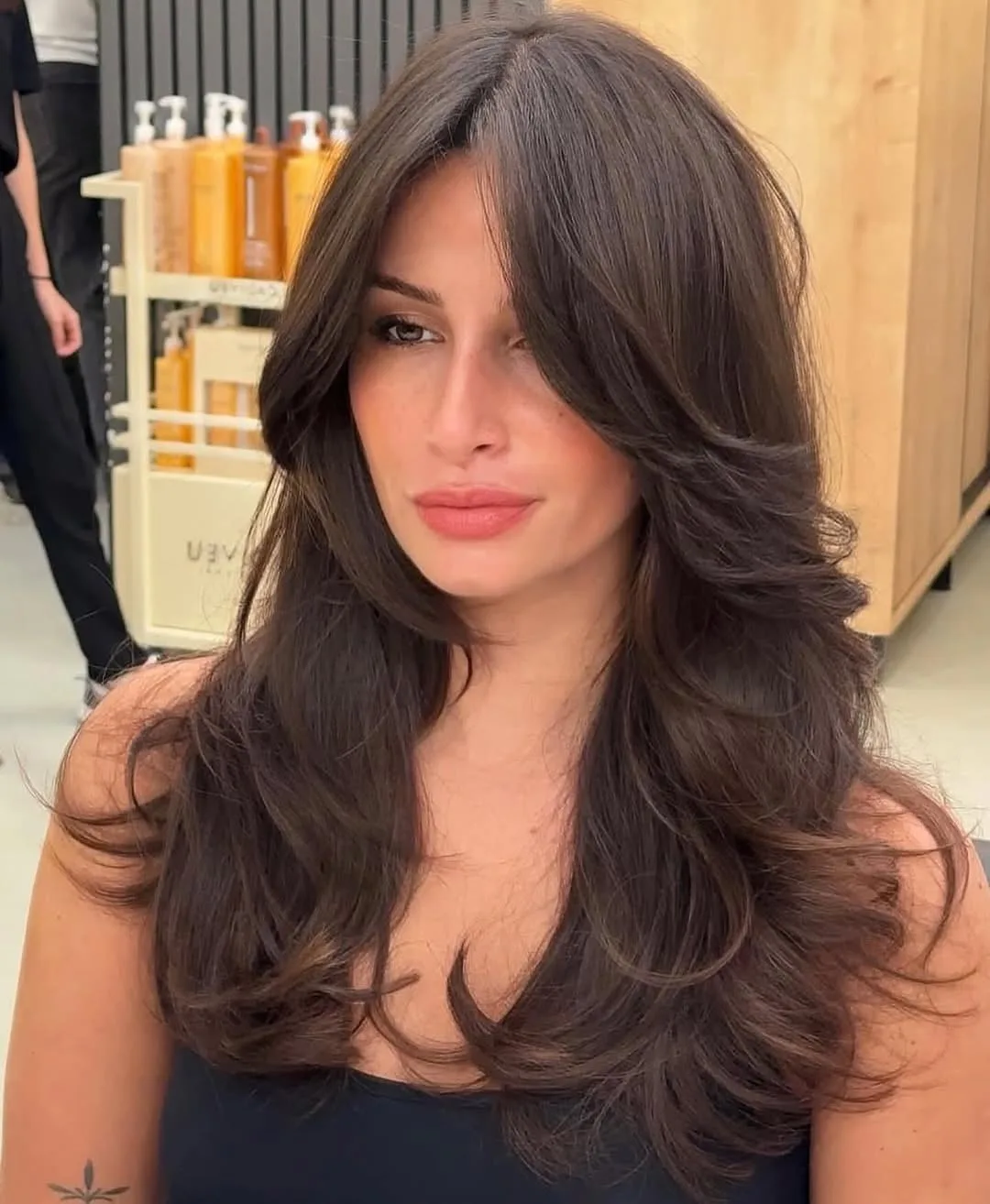
12. Curtain Bangs With Straight Hair
On straight hair, curtain bangs show every millimeter of the cut, so precision matters and the result looks sleek and polished. The fringe lies flat and glossy, which suits women who like a neat, intentional style. The challenge is cowlicks at the front hairline, which can split the bangs open in the wrong place; a good stylist will cut around yours, not through it. A round brush blow dry is non negotiable here, because straight bangs air dry flat against the forehead.
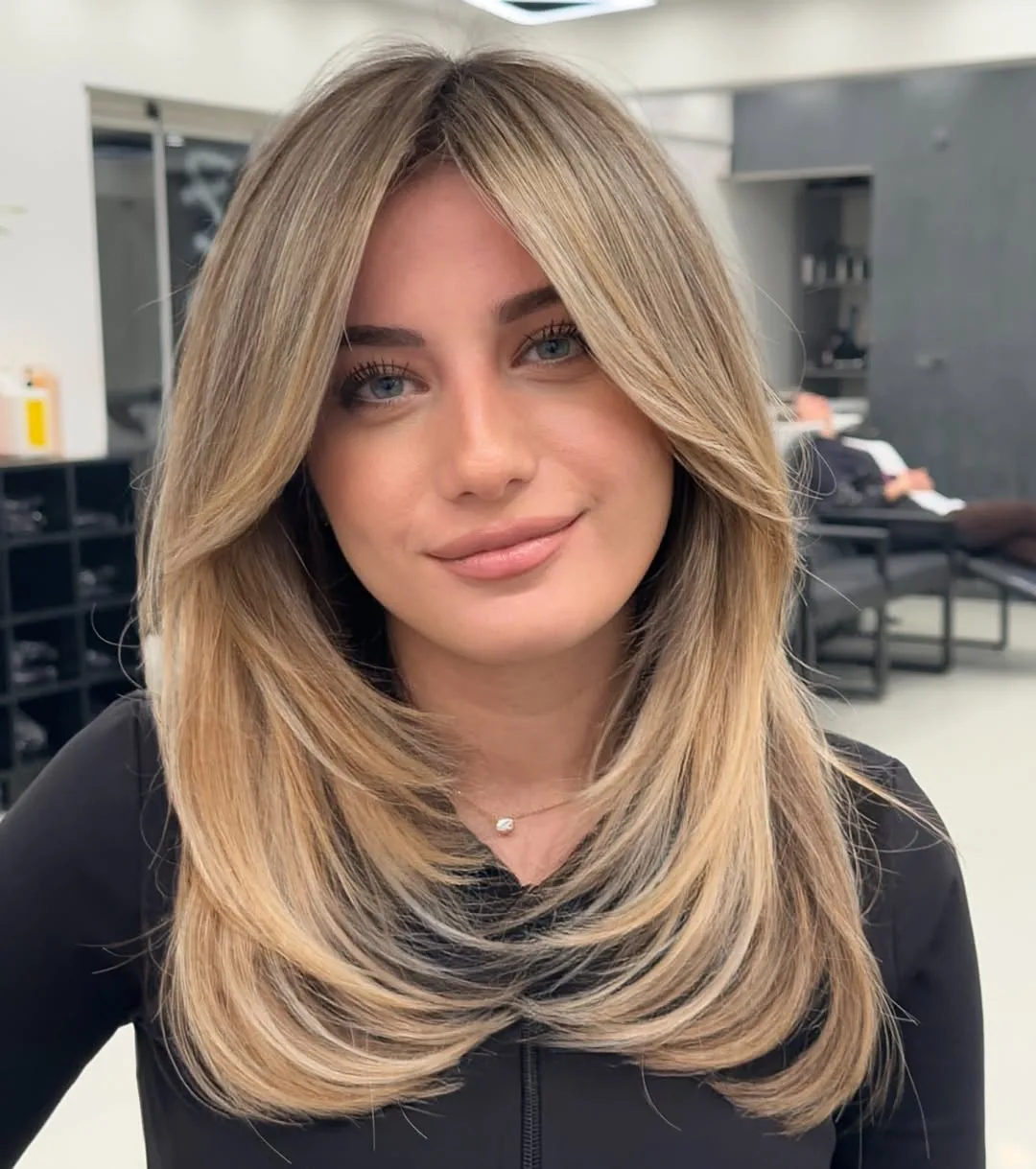
13. Curtain Bangs on Fine Hair
Fine hair can absolutely wear curtain bangs, as long as they are cut from a shallow section so the rest of your hair keeps its density. A wispy to medium weight fringe adds shape around the face without stealing fullness from the lengths. Root lift spray before blow drying stops the bangs plastering to your forehead by lunchtime. Avoid heavy conditioners near the fringe; wash the bangs alone in the sink on day two if they go limp before the rest of your hair needs washing.
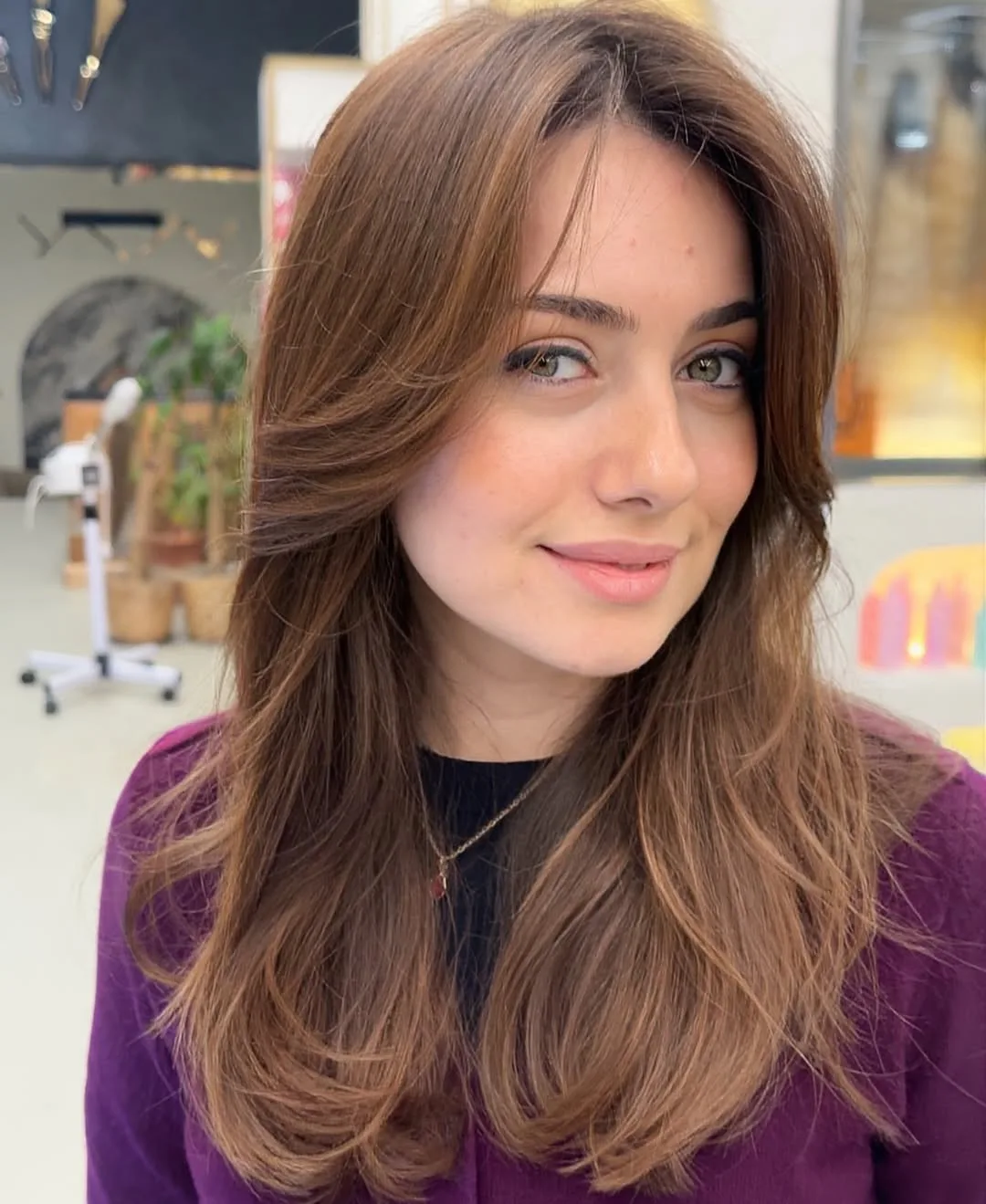
14. Seventies Curtain Bangs
The 70s version is the drama queen of the family: long, feathered, and blown out with a big round brush so the bangs flick back like wings. It pairs with long layers, center parts, and a little balayage brightness around the face. This is a styling commitment, because the flick only happens with a proper blowout or large rollers. Women who love vintage glamour find the ten minutes worthwhile, and the shape holds for two or three days with dry shampoo.
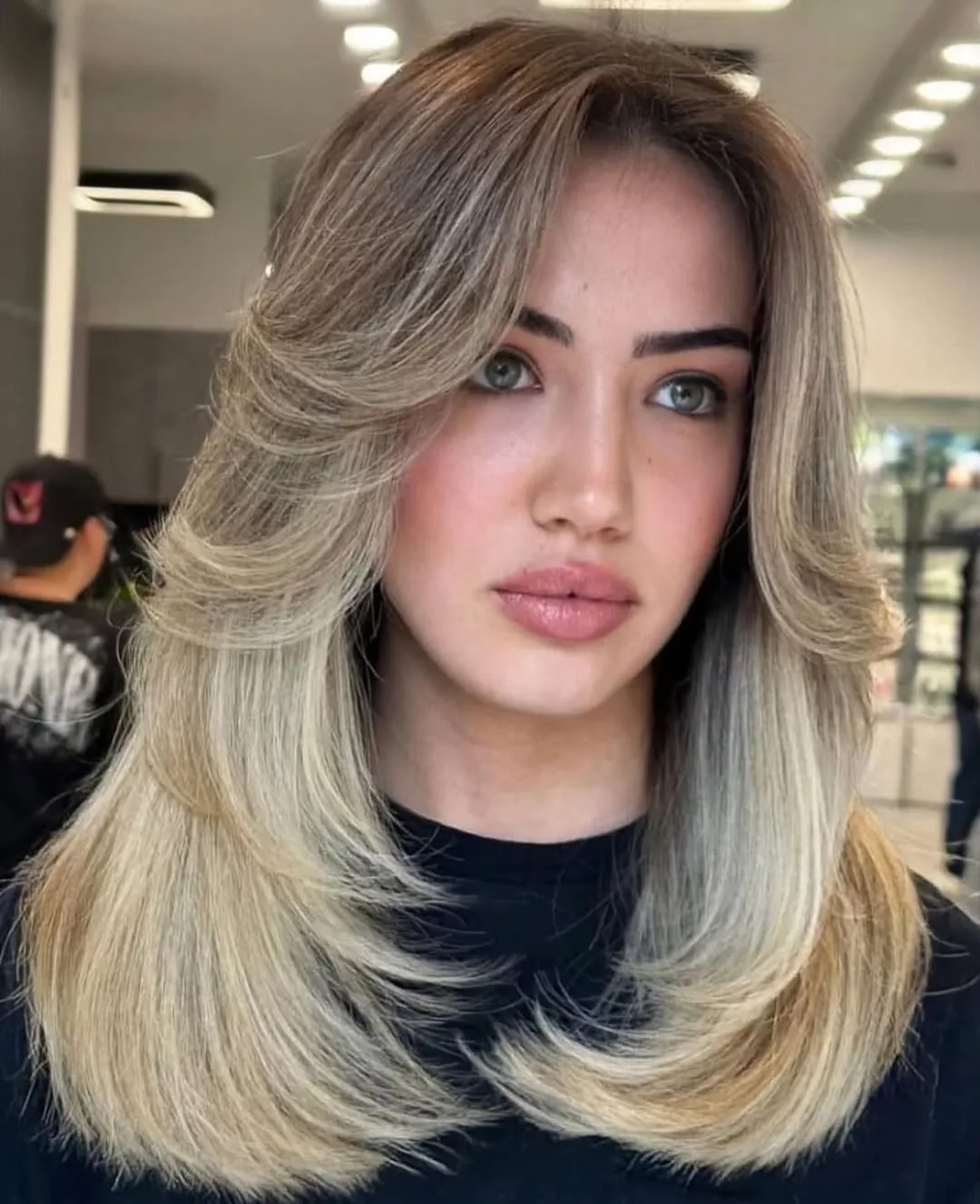
Curtain Bangs Styled Up, and Matched to Your Face
Curtain bangs earn their keep on the days you wear your hair up, and the right length flatters your specific face shape. These four versions cover ponytails, braids, round faces, and long faces.
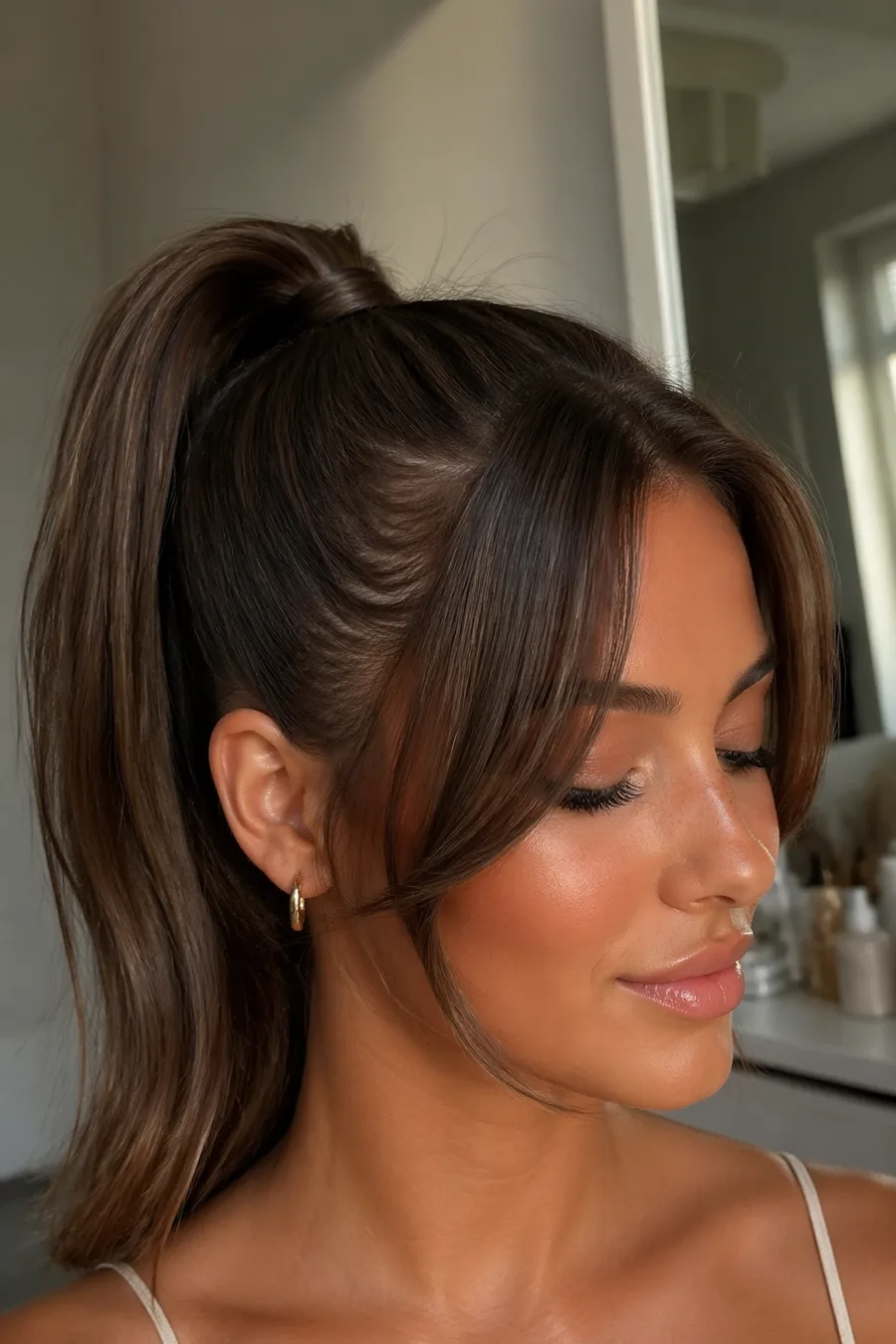
15. Curtain Bangs With a Ponytail
Leaving your curtain bangs out with a ponytail turns a plain gym hairstyle into something soft and deliberate. The face framing pieces stop the pulled back look from feeling harsh, and they flatter the jaw and cheekbones. For a polished finish, curl the bangs lightly away from the face and set them with flexible spray. If your bangs are still growing in, this is also the easiest style to hide the awkward in between lengths.
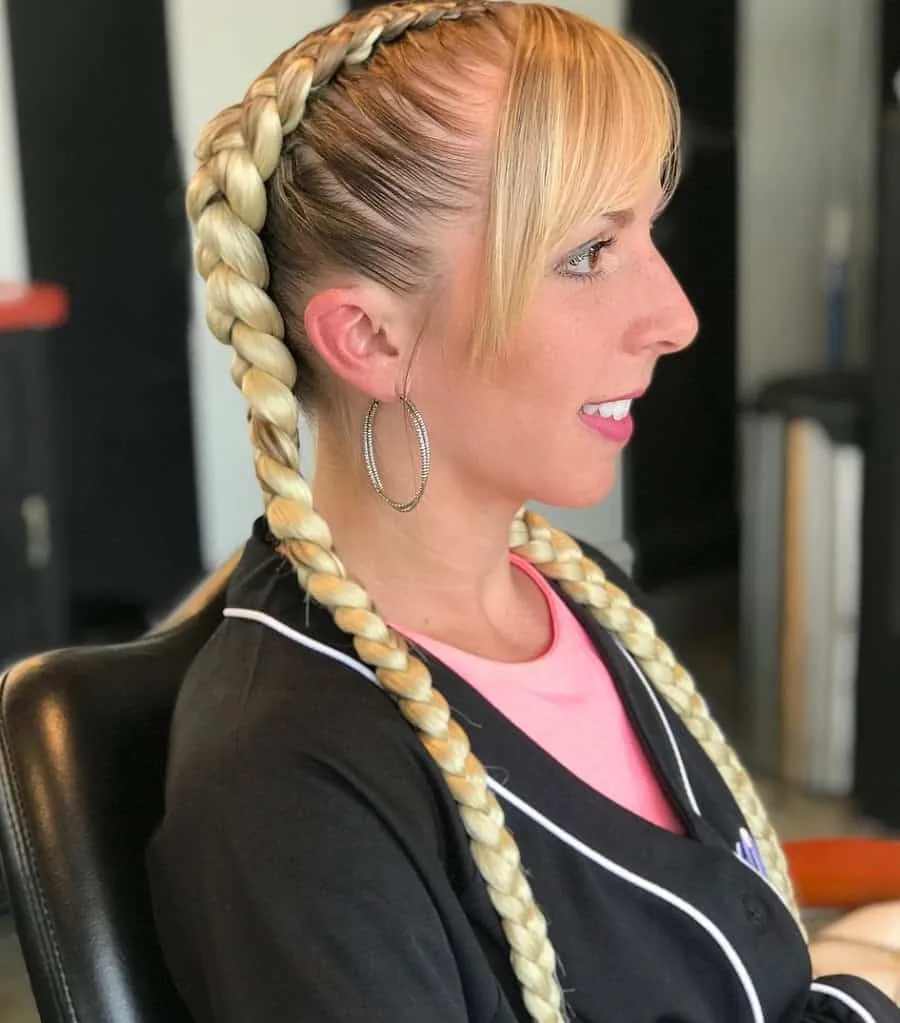
16. Curtain Bangs With Braids
Curtain bangs soften braided styles beautifully, whether you wear two Dutch braids, a single side braid, or a braided crown. Keep the bangs loose and let the braids start behind them, so the face keeps its soft frame. This pairing is practical too, because the braids hold for days while the bangs take two minutes to refresh each morning. For braid inspiration beyond the fringe, see how the styles in our knotless braids guide use face framing pieces in the same way.
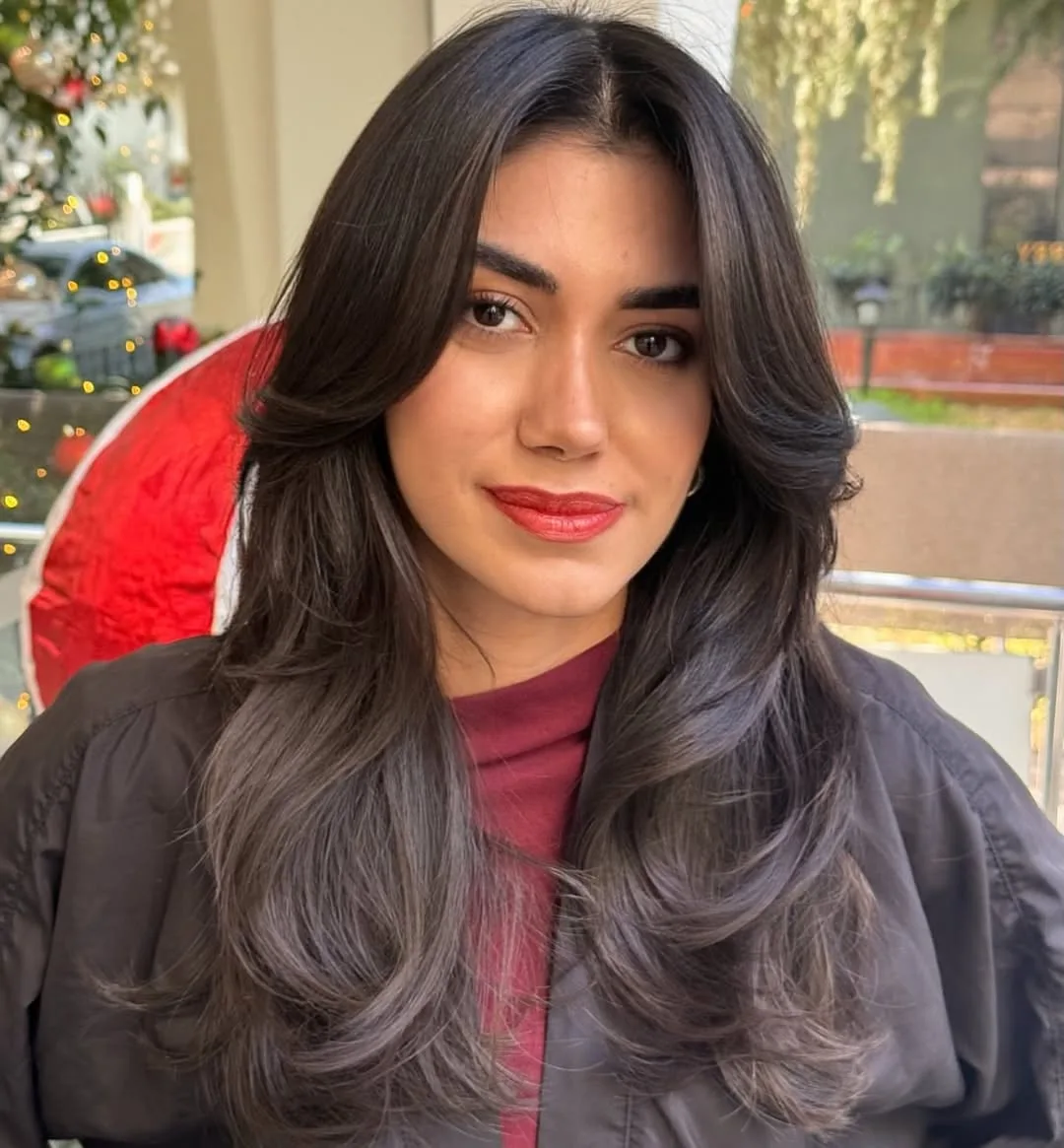
17. Curtain Bangs for Round Faces
Round faces need curtain bangs that are longer at the edges, reaching the jaw, because the long vertical lines slim and lengthen the face. Keep the center opening narrow and avoid short, wide fringes that add width at the cheeks. A slight wave through the bangs helps too, since straight across lines are what round faces should avoid. Ask your stylist to show you the length dry before cutting, because wet hair lies longer and can mislead you both.
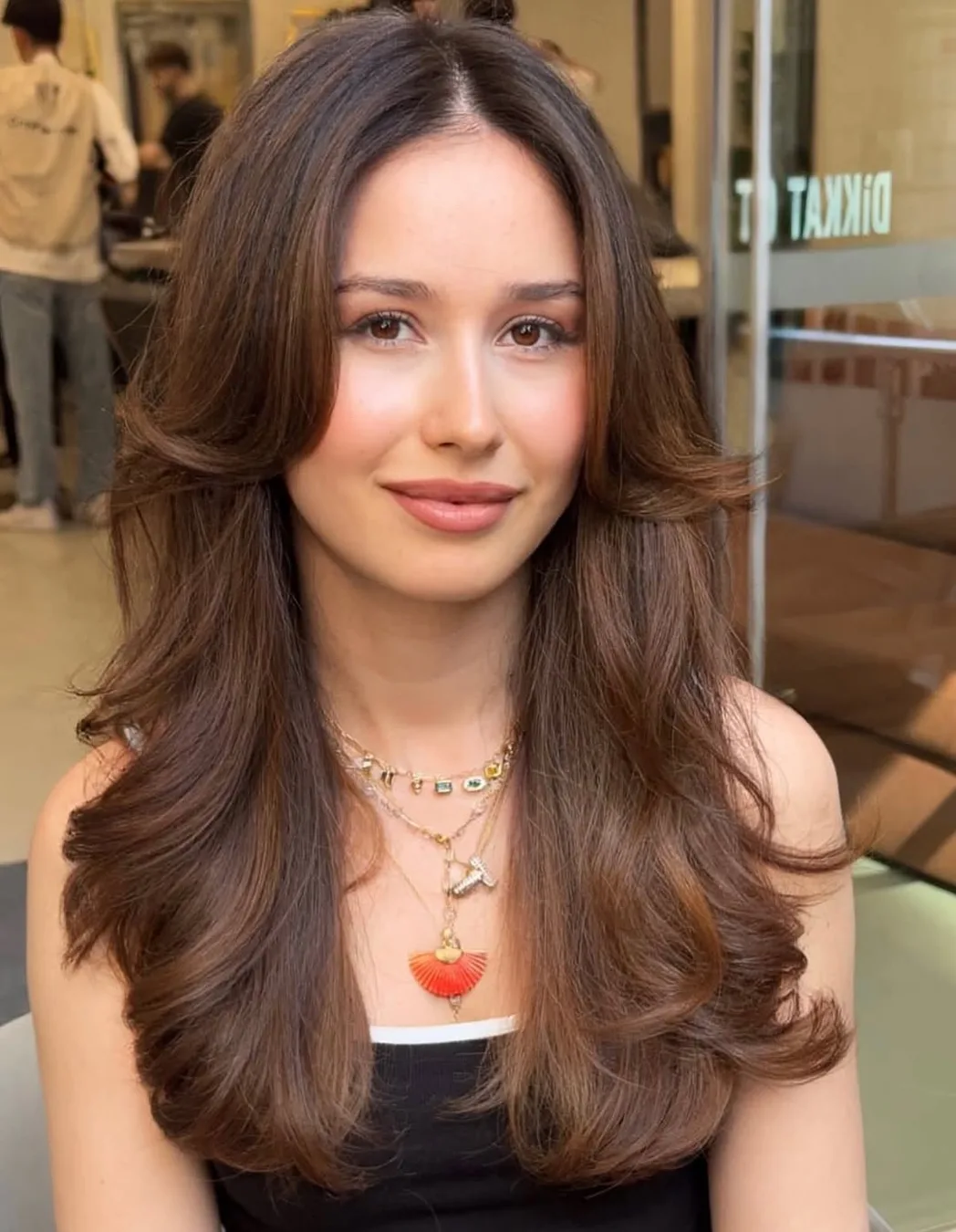
18. Curtain Bangs for Long Faces and High Foreheads
A long face or high forehead is exactly what curtain bangs were made for, because the fringe covers the forehead and adds width at the sides. Choose a fuller, thicker bang here rather than a wispy one, and let the edges flick outward at cheekbone level. That outward flick is the detail that visually widens the face back into balance. Pair with waves or layers through the lengths rather than pin straight hair, which would lengthen everything further.
Curtain Bangs for Black Women and Natural Hair
Yes, curtain bangs work on Black hair, and they are stunning with both heat styled and natural textures. These two versions cover the silk press route and the fully natural route, with honest notes on upkeep for each.
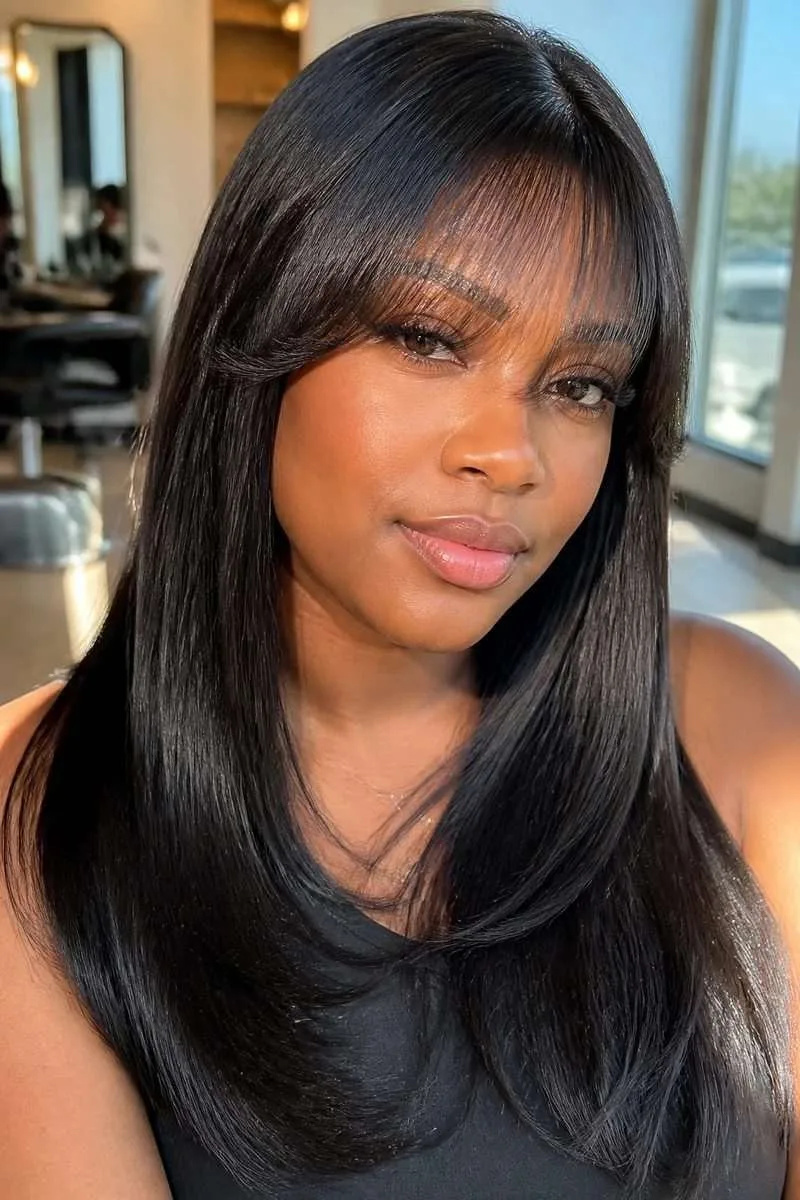
19. Curtain Bangs With a Silk Press
A silk press gives curtain bangs that smooth, swishy movement, with the fringe sweeping open over glossy, straightened lengths. It is a favorite for special occasions and for women who wear their natural hair pressed through the cooler months. The bangs will need a light touch up with a flat iron every few days, so keep heat protectant non negotiable and passes to a minimum. Protect the press at night with a wrap, and follow the dry air advice in our winter hair care guide to stop the fringe reverting at the edges.
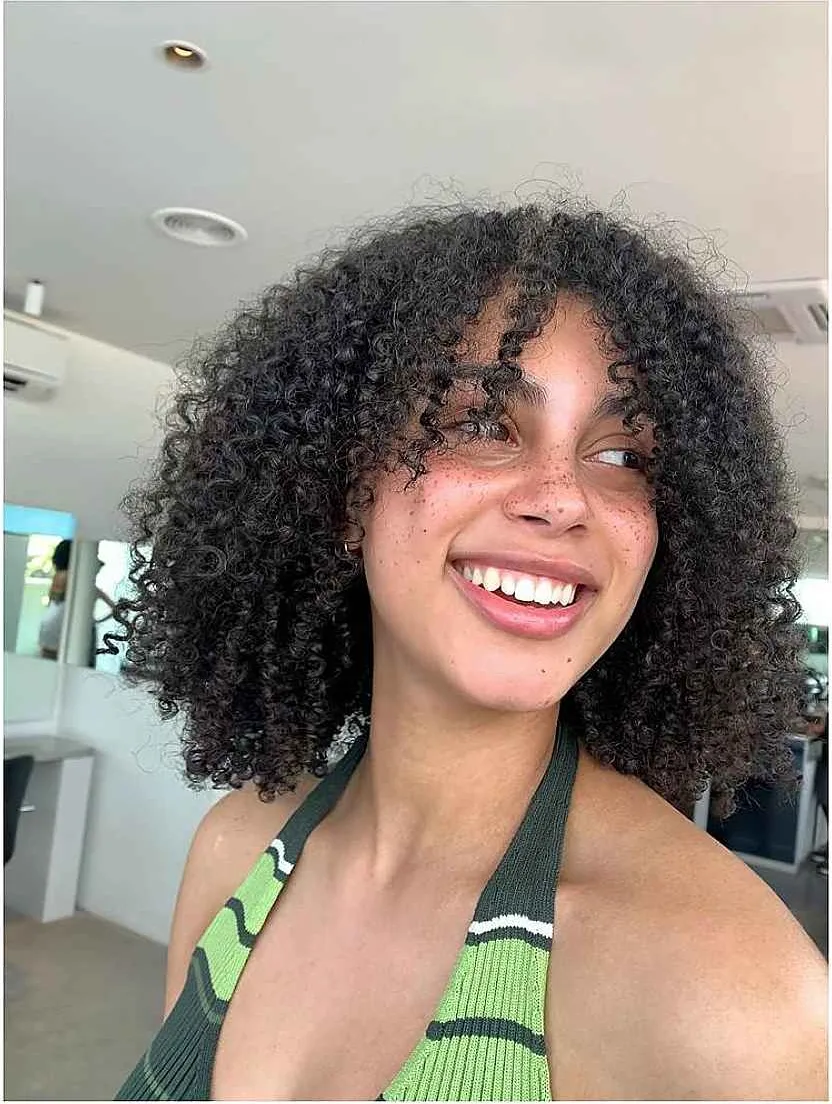
20. Curtain Bangs With Natural Curls and Coils
On natural hair, curtain bangs are cut dry and shaped around your curl pattern, leaving soft coils and curls to frame the forehead and cheekbones. The look is full, romantic, and completely heat free, and it grows out into face framing layers without an awkward stage. Definition is the routine: apply gel or curl cream to the fringe while wet, finger coil the front pieces, and let them dry untouched. Because coily hair shrinks, always ask for the bangs to be cut longer than your goal length and checked again once fully dry.
Who Curtain Bangs Suit, and Who Should Skip Them
Curtain bangs suit most women, most face shapes, and most textures, which is why stylists recommend them as the starter fringe. The honest exceptions are very strong front cowlicks, extremely oily scalps, and anyone who refuses any daily styling at all.
| Hair or face type | Verdict | Best approach |
|---|---|---|
| Oval face | Suit beautifully | Any length, classic cheekbone sweep |
| Round face | Suit with tweaks | Long edges to the jaw, narrow center opening |
| Long face or high forehead | Suit beautifully | Fuller bangs that flick out at the cheekbones |
| Square face | Suit with tweaks | Soft wispy edges to soften the jaw |
| Curly or coily hair | Suit with the right cut | Always cut dry, longer than the goal length |
| Very fine or thinning hair | Proceed gently | Shallow section, wispy weight only |
| Strong front cowlick | Think twice | Try long curtain bangs first, or skip the fringe |
| Very oily scalp | Proceed gently | Dry shampoo routine, or wash bangs daily in the sink |
If you are in the think twice group, test the look first. Part your hair in the center, pull two front sections forward, and pin the rest back for a day; you will know within hours whether a fringe suits your life.
What to Ask Your Stylist: The Exact Words
Most curtain bang disappointments come from vague requests, not bad cutting. Say this at your appointment: "I would like curtain bangs that part in the center, with the shortest point at my cheekbones and the edges blending into face framing layers. Please cut them dry or check the length dry before you finish, and keep the section shallow so my hair keeps its fullness."
Then add the details that apply to you:
- For round faces, add: "Please keep the edges long, to my jaw, so my face looks longer."
- For curly or natural hair, add: "Please cut them curl by curl and longer than the final length, because of shrinkage."
- For fine hair, add: "Please do not take the section too deep, my hair is fine and I need the density."
- Always finish with: "Please show me how to blow dry them before I leave."
Bring two or three photos of women with your hair texture wearing the bangs, not just any curtain bang photo. A fringe that works on thick straight hair will be cut completely differently on fine curls, and a good stylist will talk you through the difference.
How to Style Curtain Bangs Every Morning
Curtain bangs take about two minutes once the technique clicks: dry them forward first, then sweep them open. Here is the routine that works on every texture with small tweaks.
- Start with the bangs damp. If the rest of your hair is dry, just wet the fringe with a spray bottle.
- Apply a pea sized amount of heat protectant or mousse through the bangs only.
- Blow dry the bangs forward and down over your forehead with a paddle brush, aiming the airflow from above so they lie flat.
- Once dry, place a medium round brush under the bangs, roll it forward and away from your face, and heat for a few seconds to set the sweep.
- Let the bangs cool in that curved shape for 30 seconds, then part them in the center with your fingers and push each side open.
- For curls and coils, skip the dryer: define the front pieces with cream, finger coil, and let them air dry in the part.
- Finish with the lightest mist of flexible spray, or nothing at all if your hair holds shape well.
No time at all? A large velcro roller worn while you do your makeup gives the same sweep with no heat. Pop it in on damp bangs, remove after 15 minutes, and part with your fingers.
Trimming and Growing Out Curtain Bangs
Curtain bangs need a small trim every 4 to 6 weeks to keep the sweep, and they are the easiest fringe in the world to grow out if you change your mind. Both facts come from the same design: the edges are already long, so nothing ever looks sudden.
For trimming between salon visits, only ever dust the very center points, dry, with proper hair scissors, taking off 2 to 3 millimeters at a time. Never cut wet, never cut across in a straight line, and never trim the edges, because the edges are what blend into your layers. If in doubt, leave it for your stylist; a professional bang trim is quick and often inexpensive.
To grow them out, simply stop trimming and start styling the bangs as face framing layers: part them deeper, tuck them behind your ears, or pin them into braids and ponytails as they lengthen. Most women find the bangs disappear into their layers within 3 to 4 months, which is exactly why this fringe is such a safe experiment. The styles in our winter hairstyles collection include plenty of pinned back options for the in between weeks.
FAQs
Do curtain bangs suit everyone?
Almost everyone, because the length and weight can be adjusted to each face. Round faces need longer edges, long faces need fuller bangs, and curly hair needs a dry cut. The main exceptions are very strong front cowlicks and women who want a zero styling fringe, since curtain bangs do ask for two minutes of attention most mornings.
How long do curtain bangs take to grow out?
They blend into face framing layers within about 3 to 4 months, and reach full layer length in 6 to 8 months depending on your growth rate. Because the edges start long, there is no harsh growing out line. Style them swept back, tucked, or pinned while they lengthen and most people will never notice the transition.
Can I cut curtain bangs at home?
You can, but we recommend the first cut happens in a salon so the section, angle, and length are set correctly. After that, tiny dry dusting trims at home are fairly safe if you take off only 2 to 3 millimeters at a time. If you do try the full cut at home, work on dry hair, cut far less than you think, and remember that you can always take more off tomorrow.
Do curtain bangs work on thin hair?
Yes, if they are cut from a shallow section and kept wispy to medium in weight. A deep, thick fringe steals density that thin hair cannot spare and ends up looking stringy. Ask your stylist to start shallow; you can always take the section deeper at the next appointment if you want more fringe.
How do I stop my curtain bangs separating or going flat?
Flat bangs usually need product at the root, not more length taken off. Use a root lift spray or mousse before blow drying, dry them forward first, and finish with the round brush sweep described above. Separated, oily bangs respond well to dry shampoo applied the night before, and to washing just the fringe in the sink on second day hair.
Curtain bangs are the friendliest fringe you will ever try: flattering now, forgiving later, and easy to leave behind if you change your mind. Save this guide to your hair board on Pinterest so you have the stylist wording and the morning routine ready, and pick your favorite of the 20 styles before your next appointment.

Twelve years behind the chair taught me one thing: the best hairstyle is the one that works on your hair, your morning and your budget. That is the standard for every guide here.