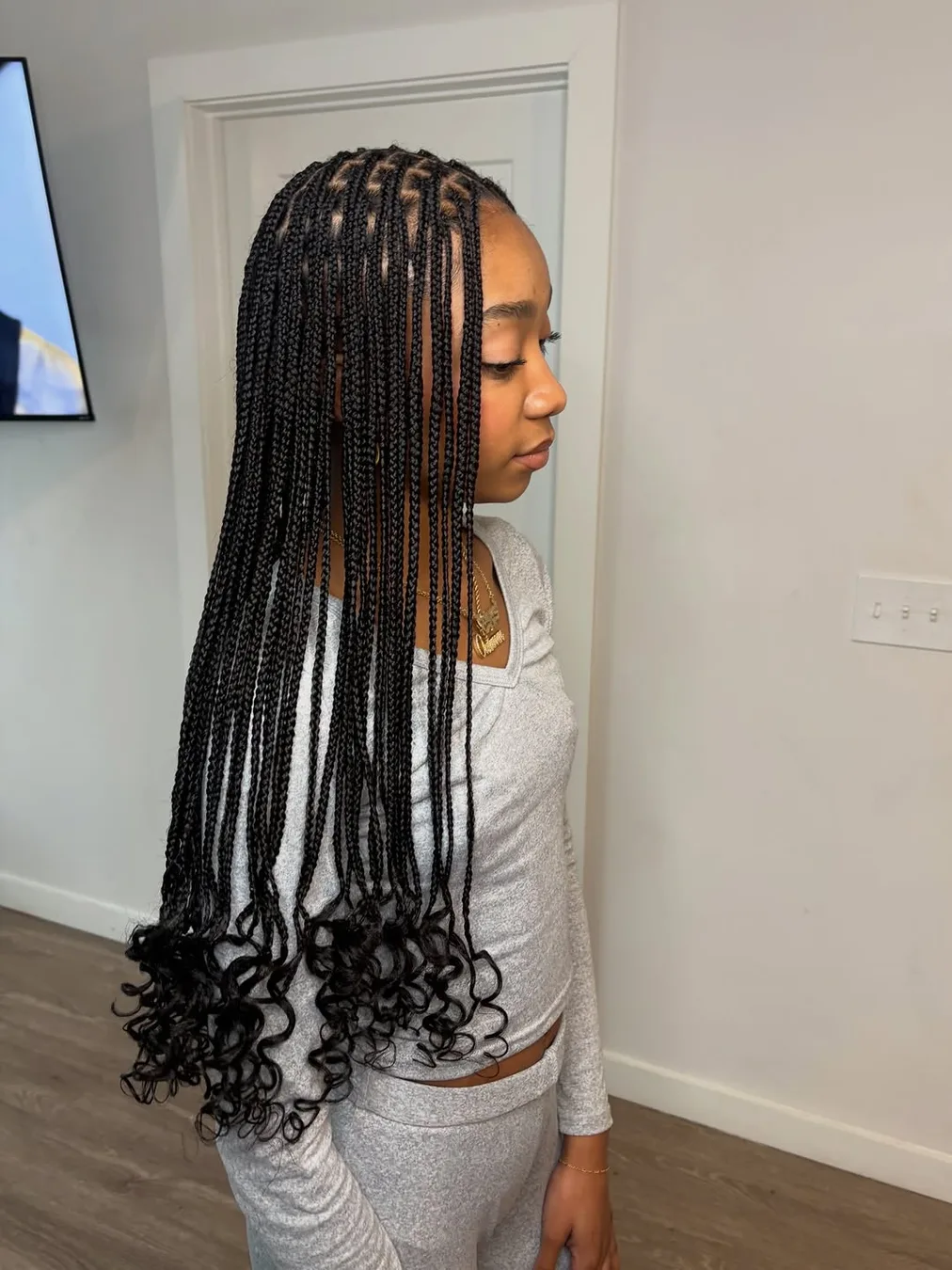
How to Grow 4C Hair to Waist Length: The Routine That Worked for Me
In this guide
- First, Your Hair Is Longer Than It Looks
- My Wash Day, Step by Step
- My Weekly Routine at a Glance
- Protein and Moisture: The Balance That Ended My Breakage
- Protective Styles Work, But Only With Real Breaks
- Trims and Dusting: I Cut My Hair to Grow It
- The Night Routine That Protects Your Progress
- Food, Patience and the Honest Timeline
- Mistakes That Cost Me Length
- FAQs
Yes, 4C hair can grow to waist length. Mine did, and the secret was never faster growth, it was retention: a weekly moisture routine, protective styles with real breaks in between, tiny regular trims, and a satin bonnet every single night. Hair grows about half an inch a month, so waist length is a three to five year project of keeping the ends you already grew.
For three years, my hair stayed at exactly the same length. Every photo, every year: shoulder length. I bought the growth oils, I took the gummies, and I was convinced my 4C hair had a personal limit it refused to pass.
It did not. My hair was growing the whole time, it was just breaking at the same speed, so the length never showed. What changed everything was treating length as something you keep, not something you chase. This is the routine that took me from shoulder length to waist length, mistakes included.
First, Your Hair Is Longer Than It Looks
Your hair is almost certainly longer than the mirror tells you. Healthy 4C hair shrinks 50-75 percent when it dries loose, so waist length hair can sit at your shoulders and armpit length hair can look like a short afro.
I only measure my length on wash day, on wet, stretched hair, and I suggest you do the same. A rough guide for stretched length: shoulder length is around 12 inches, armpit length 16-17 inches, bra strap length 19-20 inches, and waist length 22-24 inches, though your torso decides your numbers.
Once I started tracking stretched length every three months, the journey stopped feeling stuck. The inches were coming. They had just been invisible, and some of them had been snapping off before I could count them.
My tracking method is embarrassingly simple: the same striped t-shirt, the same bathroom mirror, one photo of my hair stretched down my back. Stripes do not lie the way memory does. On the months I felt like quitting, that photo line was the proof that the routine was working even when my shrunken hair looked identical to last year.
My Wash Day, Step by Step
Wash day is where length is protected or lost, so mine is slow, sectioned, and never rushed. I wash once a week, it takes about two hours, and every step happens in 4-6 twists or braids so my hair never tangles into a knot I have to rip through.




Affiliate links: I may earn a small commission at no extra cost to you. Prices as of Nov 27, 2026, and may change.
- Detangle before water. I coat dry hair with a cheap conditioner and oil, then finger detangle in sections. Dry detangling first means far less breakage in the shower.
- Shampoo in sections, scalp first. I use a gentle sulfate-free shampoo most weeks and a clarifying shampoo once a month to remove buildup. The suds that rinse down are enough for the lengths.
- Deep condition with heat for 20-30 minutes. This is the step I never skip. A plastic cap and a warm towel or heat cap lets the conditioner actually reach the inner strand.
- Rinse cool and keep the sections. I rinse each twist separately so the hair stays stretched and separated.
- Apply leave-in conditioner to soaking wet hair. Water is the real moisturizer; the leave-in just helps the hair hold onto it.
- Layer with the LCO method: liquid, cream, then a light oil to seal. My ends get a little extra oil because they are the oldest hair on my head.
- Style straight into twists. Wash day ends with 10-14 medium twists, which become my base style or the foundation under a protective style.
- Dry fully before bed. Damp hair under a bonnet turns into frizz and tangles, so I air dry or sit under a hooded dryer until the twists are dry.
That is the whole wash day. Nothing exotic, nothing expensive, just the same gentle order every single week. My favorite low-manipulation way to wear the week out is in my twist out styles for 4C hair, which start from these exact wash day twists.
My Weekly Routine at a Glance
Consistency grew my hair, not intensity. This table is my actual week and the rhythm I kept for years, and it is the same rhythm I point every friend to when she asks what I really do.
| When | What I do | Why it matters |
|---|---|---|
| Wash day, weekly | Full wash, deep condition, style into twists | Resets moisture before dryness turns into breakage |
| Every night | Satin bonnet or scarf, hair in a pineapple or 2-4 loose twists | Stops the friction breakage that happens while you sleep |
| Day 3 or 4 | Light spritz of water and leave-in on the ends only | The ends are the oldest, driest hair and need a midweek drink |
| Every 6-8 weeks | Protein treatment if my hair feels mushy or too soft | Restores the strength side of the moisture balance |
| Every 3-4 months | Dusting trim of a quarter inch or less | Removes split ends before they travel up the strand |
| Between protective styles | 1-2 full weeks of loose hair | Lets the scalp, edges and hairline recover before the next install |
Notice what is not on this table: daily styling, daily combing, daily anything. The less my hands were in my hair, the more length stayed on my head.
Protein and Moisture: The Balance That Ended My Breakage
Most of my breakage was a balance problem, not a growth problem. Hair that stretches and stretches without springing back needs protein, and hair that feels stiff and snaps at a touch needs moisture, and for two years I kept giving my hair the wrong one.
Here is how I tell the difference now, using one shed strand on wash day:
- Too much moisture: the strand stretches far, feels gummy or mushy, and eventually pops. My hair also looks limp and will not hold a twist out.
- Too much protein: the strand barely stretches and snaps right away. My hair feels stiff, rough and straw-like, and breaks when I simply handle it.
- Balanced: the strand stretches a little, then springs back. That gentle spring is what healthy 4C hair feels like.
My rhythm is moisture every week through deep conditioning, and protein only every 6-8 weeks or when the stretch test asks for it. When I finally stopped doing protein treatments on a fixed schedule and started doing them on demand, the little broken hairs on my shoulders all but disappeared.
One more thing I wish someone had told me sooner: a protein treatment is not a deep condition, and your hair wants the deep condition right after. Whenever I do a strengthening treatment, I follow it with a moisturizing deep conditioner in the same wash day. Protein gives the strand its backbone; moisture gives it its bend. Waist length hair needs both, in that order.
Protective Styles Work, But Only With Real Breaks
Protective styles grew my hair because they left my ends tucked away and untouched for weeks at a time. But they only worked because I treated them like a rest with an end date, never a lifestyle with no pauses.


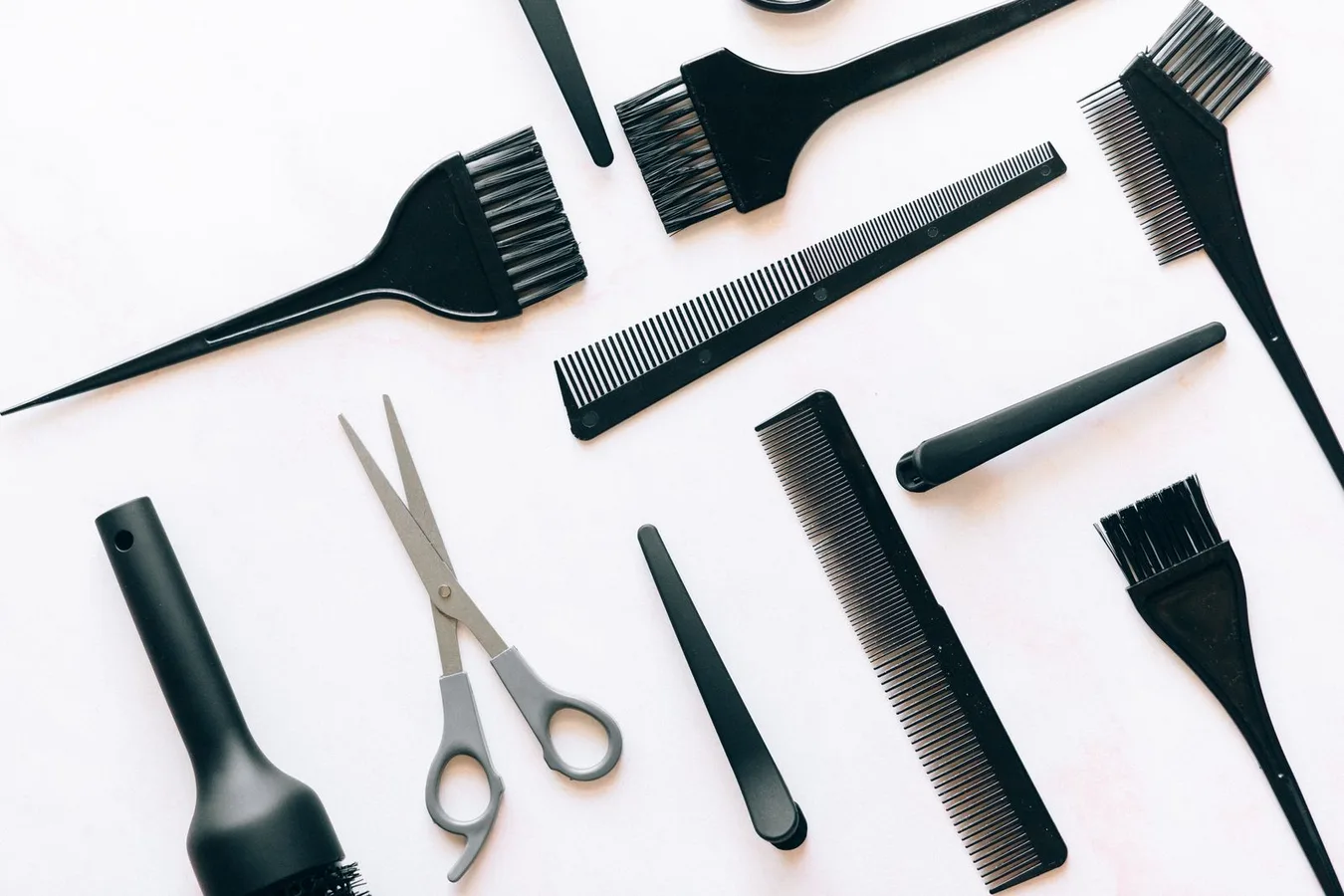
Everything you need to recreate this look


Affiliate links: I may earn a small commission at no extra cost to you. Prices as of Nov 27, 2026, and may change.
My rules are simple. A style stays in 4-6 weeks at the most, I moisturize the hair underneath twice a week with a light spray, and nobody installs anything tight enough to hurt, ever. When the style comes out, my hair gets 1-2 full weeks loose before anything new goes in.
Under the style, my hair is not forgotten. Twice a week I spray the braids or twists lightly with water mixed with leave-in, run a little oil along my scalp if it feels tight, and sleep in my bonnet exactly as I would with loose hair. A protective style that dries out underneath is just breakage with good PR. When I take a style down, the hair that comes out should feel soft, not crispy.
Those break weeks are not laziness, they are the point. They let my scalp breathe, let my edges recover, and let me deep condition and inspect my real hair. The rotation I trust most is in my guide to winter protective styles for 4C hair, and the gentlest install I know is a set of knotless braids, which start with your own hair instead of a tight knot.
Trims and Dusting: I Cut My Hair to Grow It
Holding onto thin, split ends cost me more length than any trim ever did. A split end does not stay politely at the tip; it travels up the strand, splits again, and takes healthy hair down with it.
What I do now is called dusting: every 3-4 months I trim a quarter inch or less from stretched twists, just the wispy, tired ends. Between dustings, I do search and destroy sessions on single strand knots, snipping the knot only, never a whole section.
A full, honest trim is different, and I book one when my ends look see-through for the last two inches or when the shape is uneven no matter how I style it. Losing an inch in the chair once saved me from losing three inches to splits later. Scissors are not the enemy of length. Ragged ends are.
The Night Routine That Protects Your Progress
Your bonnet is doing more for your length than your growth oil is. Cotton pillowcases pull moisture out of 4C hair and rough up the cuticle all night, and I undid entire wash days that way for years without knowing it.
My nightly routine takes three minutes. I gather my hair into a high pineapple or 2-4 loose twists, cover it with a satin bonnet or scarf, and sleep on a satin pillowcase as backup for the nights the bonnet travels. In the morning I take it down, shake, and go.
Travel taught me the same lesson the hard way. One weekend on hotel cotton pillows, hair loose because I forgot my bonnet, undid a month of careful ends. Now the bonnet lives in my toiletry bag, not my drawer, and a spare satin pillowcase comes on every trip. Length is protected in the boring moments, not the special ones.
On dry winter weeks I add one small step: a pea-sized amount of leave-in worked into the ends before the bonnet goes on. The full cold-weather version of this routine lives in my winter natural hair care tips, because dry air is where most of my winter breakage used to happen.
Food, Patience and the Honest Timeline
No gummy, tea or oil ever outgrew my routine. Hair is built from what you eat and how you live, so I keep it basic: enough protein at meals, iron-rich foods like leafy greens and beans, real water through the day, and sleep that my bonnet routine already depends on.
Now the timeline, honestly. Hair grows about half an inch a month, roughly 6 inches a year, for almost everyone. Going from 12 inches at the shoulder to 23 inches at the waist means retaining about 11 inches, which is two years of perfect retention or, in real life, three to four years of very good retention.
Setbacks deserve a sentence of their own, because you will have one. Postpartum shedding, a stressful season, a stylist who trimmed with enthusiasm: something will take an inch or two at some point. The women who reach waist length are not the ones who never lost length. They are the ones who treated a setback as information, fixed the cause, and kept the routine going anyway.
My own trip took just over three years, with one setback winter where tight braids cost me my edges and an inch of length. I check my length every three months at most, because monthly measuring only measures your patience. If you want the bigger picture of caring for this texture, the hair type and texture hub is where all my natural hair guides live together.
Mistakes That Cost Me Length
Every inch I lost, I lost to one of these. If your hair is stuck, read this list before you buy anything new, because not one of these mistakes is fixed by a product. They are all fixed by a habit, and habits are free.
- Wearing braids back to back for a year with no break weeks. My edges thinned and my ends dried out under install after install.
- Skipping deep conditioner when I was busy. One skipped week became a dry month, and dry 4C hair breaks when you look at it.
- Restyling every morning. Chasing a fresh twist out daily meant daily pulling, separating and friction on the same fragile ends.
- Monthly silk presses. The heat itself was not the villain; the heat with no protein balance and no trims was.
- Sleeping on cotton with loose hair. I woke up to lint, tangles and a halo of broken ends on the pillow.
- Comparing my timeline to everyone else's. Different torso lengths, different shrinkage, different starting points. Their year two was never going to look like mine.
FAQs
How long does it take to grow 4C hair to waist length?
For most women, three to five years from shoulder length. Hair grows about 6 inches a year, and the difference between women who reach waist length and women who plateau is retention, not growth speed. My own journey from shoulder to waist took just over three years.
Does 4C hair grow more slowly than other hair types?
No. 4C hair grows at roughly the same rate as every other texture. It breaks more easily because each bend in the coil is a weak point and because the curl pattern makes it harder for scalp oils to travel down the strand, which is why it looks like it is not growing.
How often should I wash 4C hair while growing it out?
Once a week works best for me, and every 7-10 days is the range I suggest. Washing less often lets dryness and buildup build up; washing far more often risks drying the hair out. The weekly deep condition matters more than the exact day you choose.
Do protective styles actually make hair grow faster?
They do not change how fast hair grows from the scalp. What they do is protect your ends from friction, weather and your own hands, so you keep the length you grew. Growth plus protection equals visible length; growth alone often does not.
Should I trim my hair while I am trying to grow it?
Yes, small and regular beats big and rare. I dust a quarter inch every 3-4 months and snip single strand knots as I find them. Split ends left alone travel upward and eventually force a much bigger cut.
Waist length 4C hair is not a product, it is a habit: moisture every week, ends protected every night, and patience measured in seasons, not weeks. Save this to your natural hair board so the routine and the timeline are waiting for you on your next wash day.

Twelve years behind the chair taught me one thing: the best hairstyle is the one that works on your hair, your morning and your budget. That is the standard for every guide here.